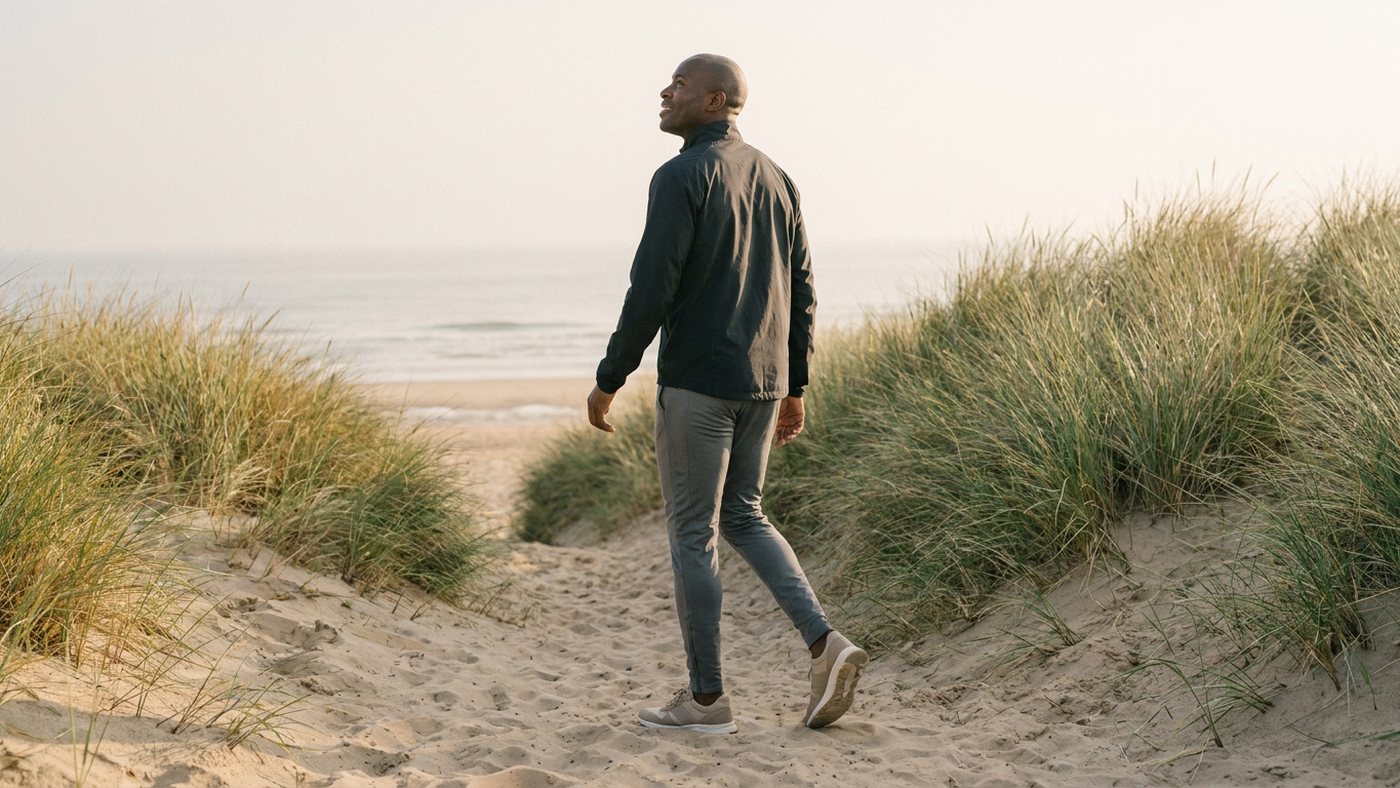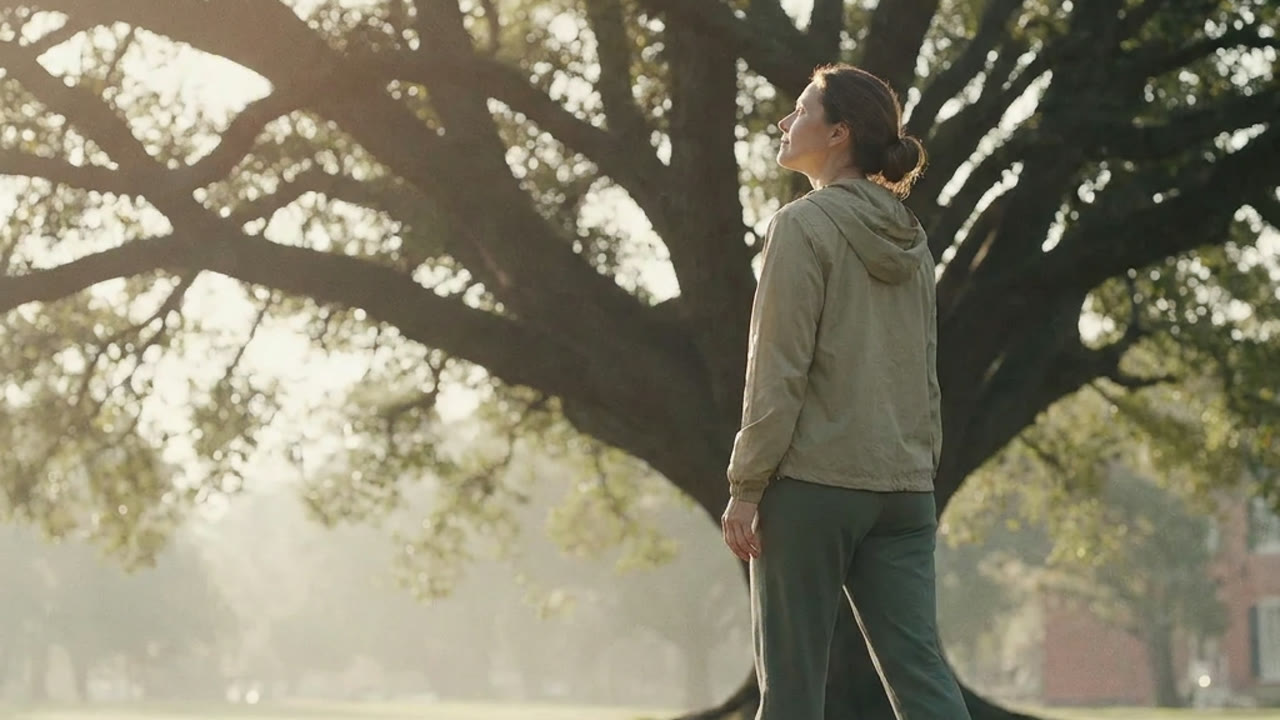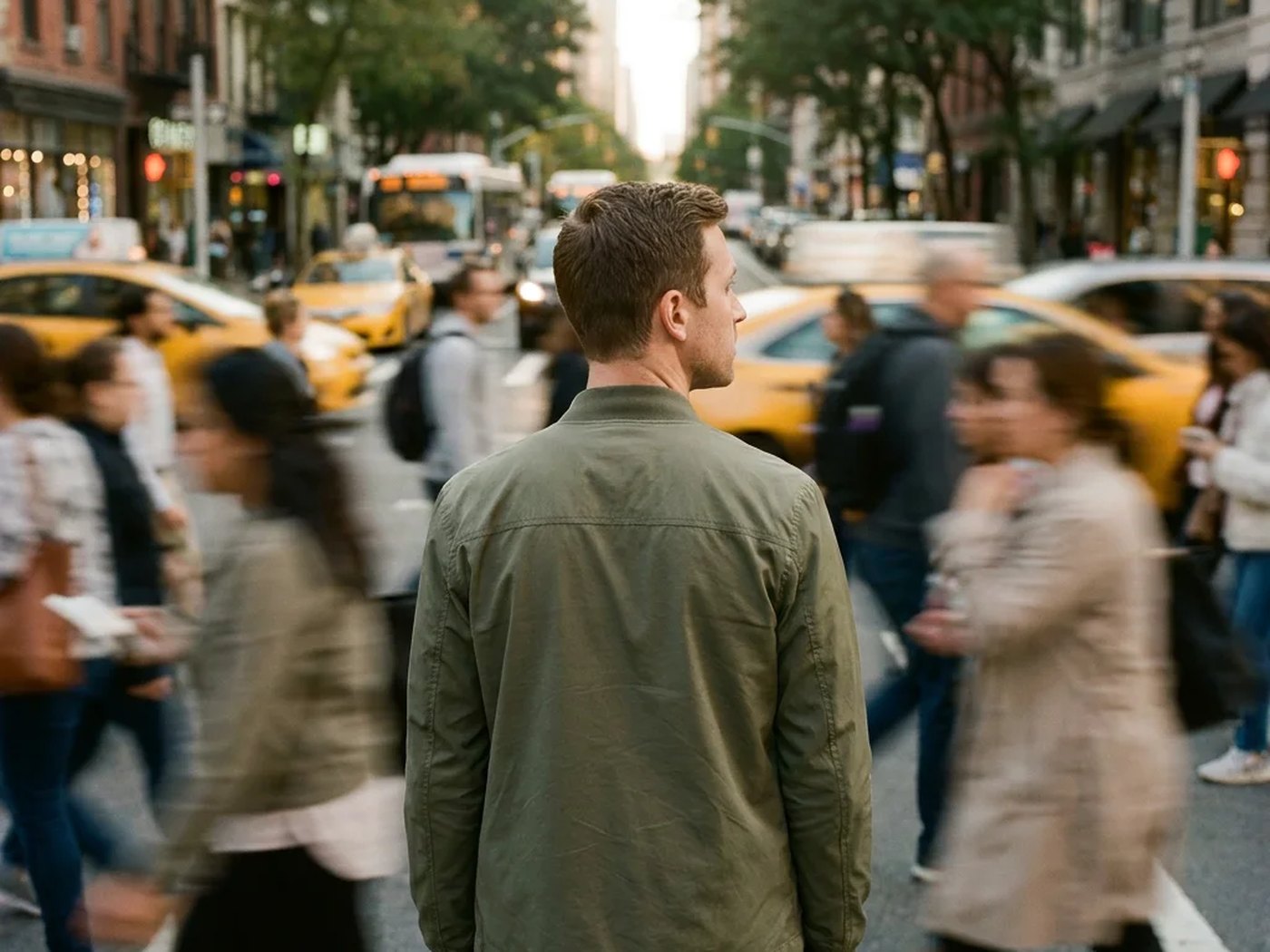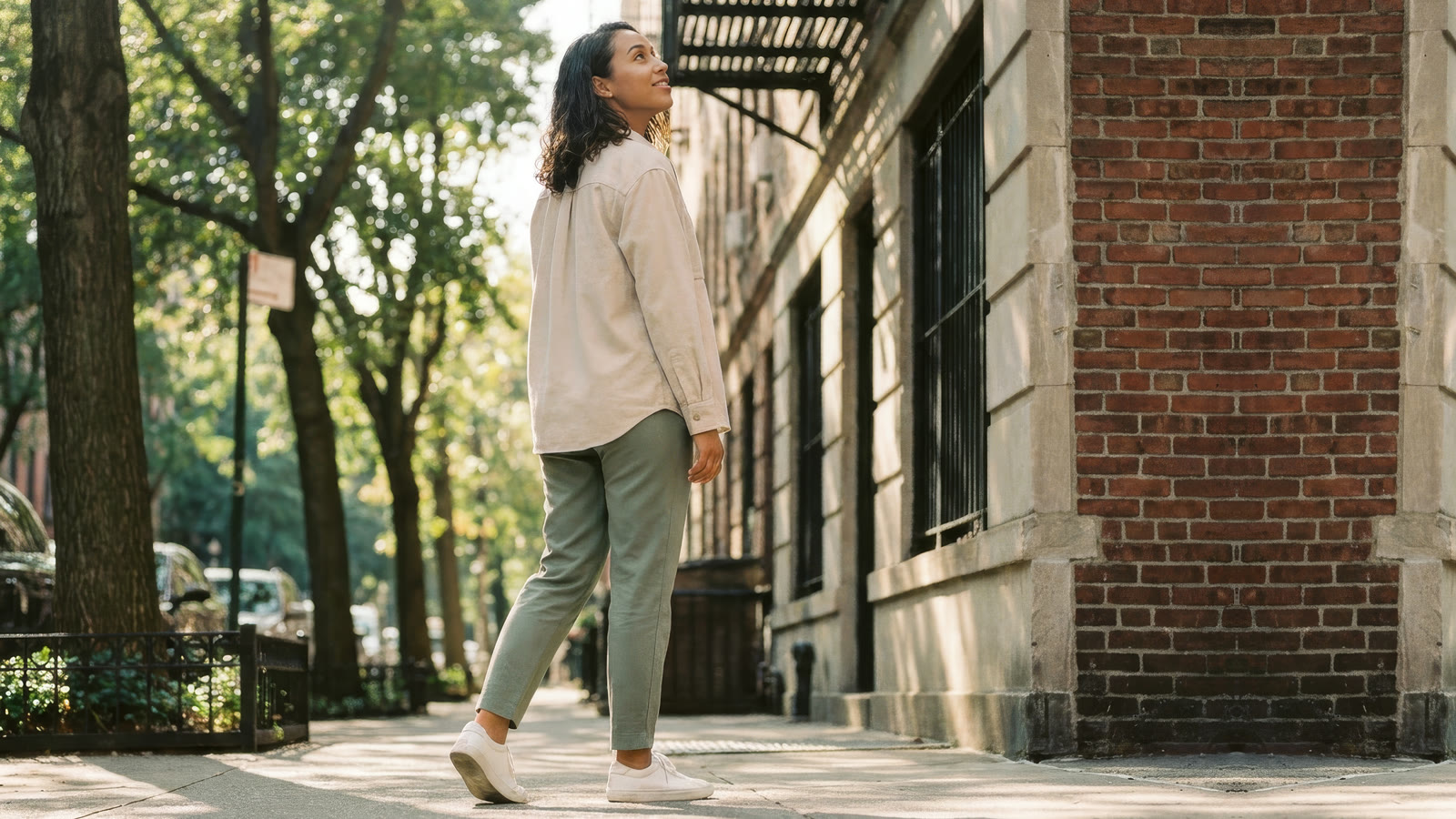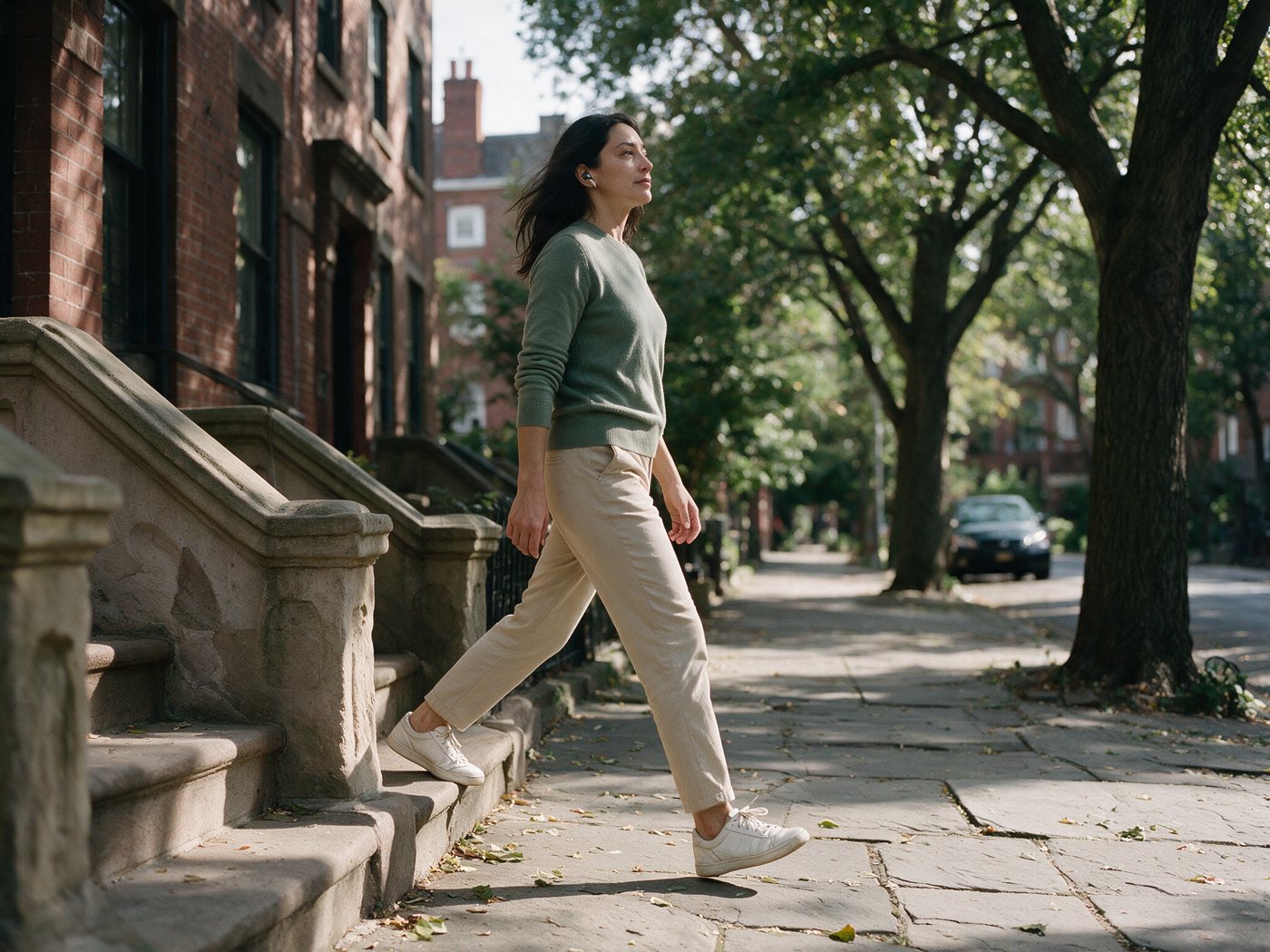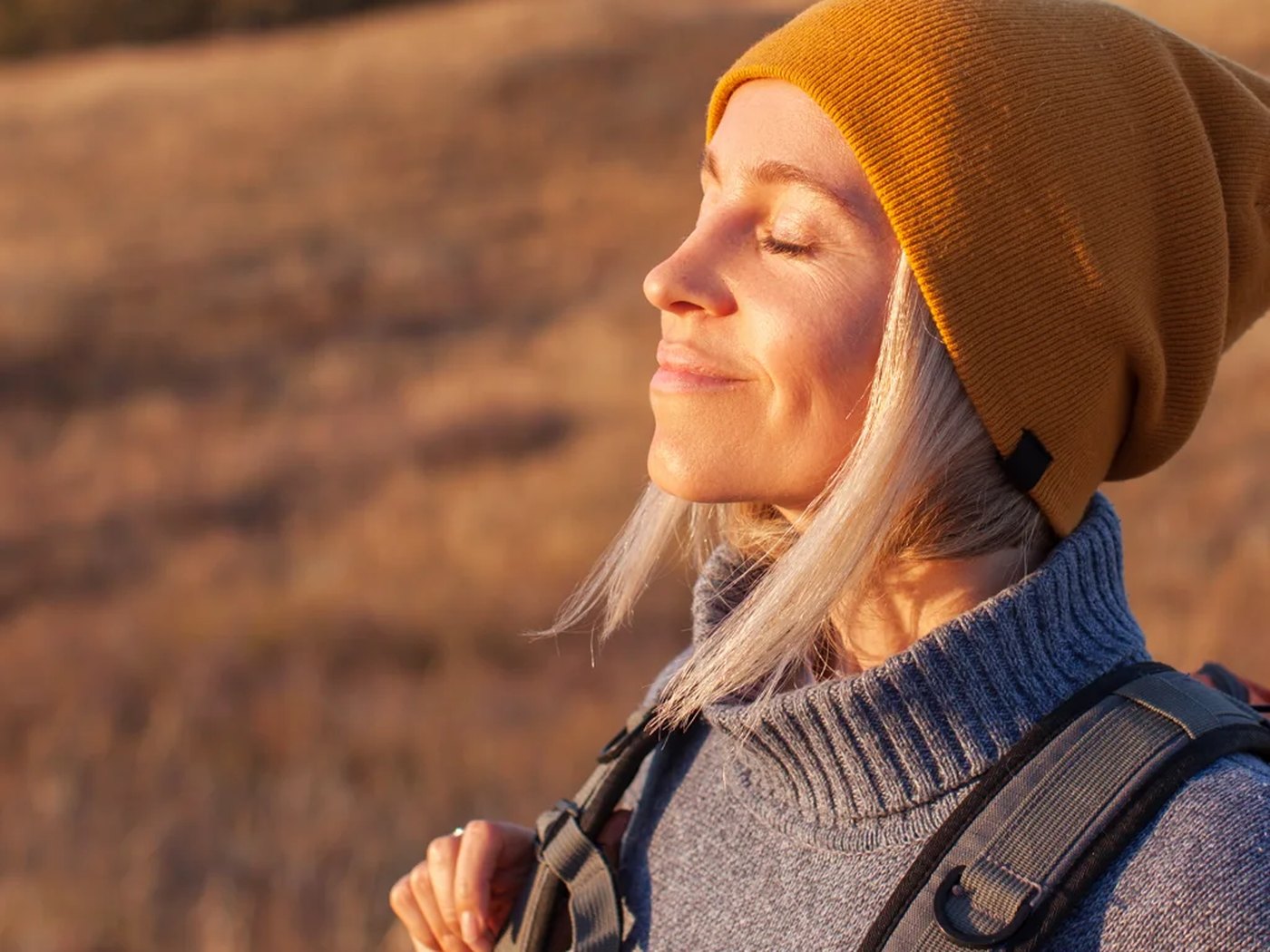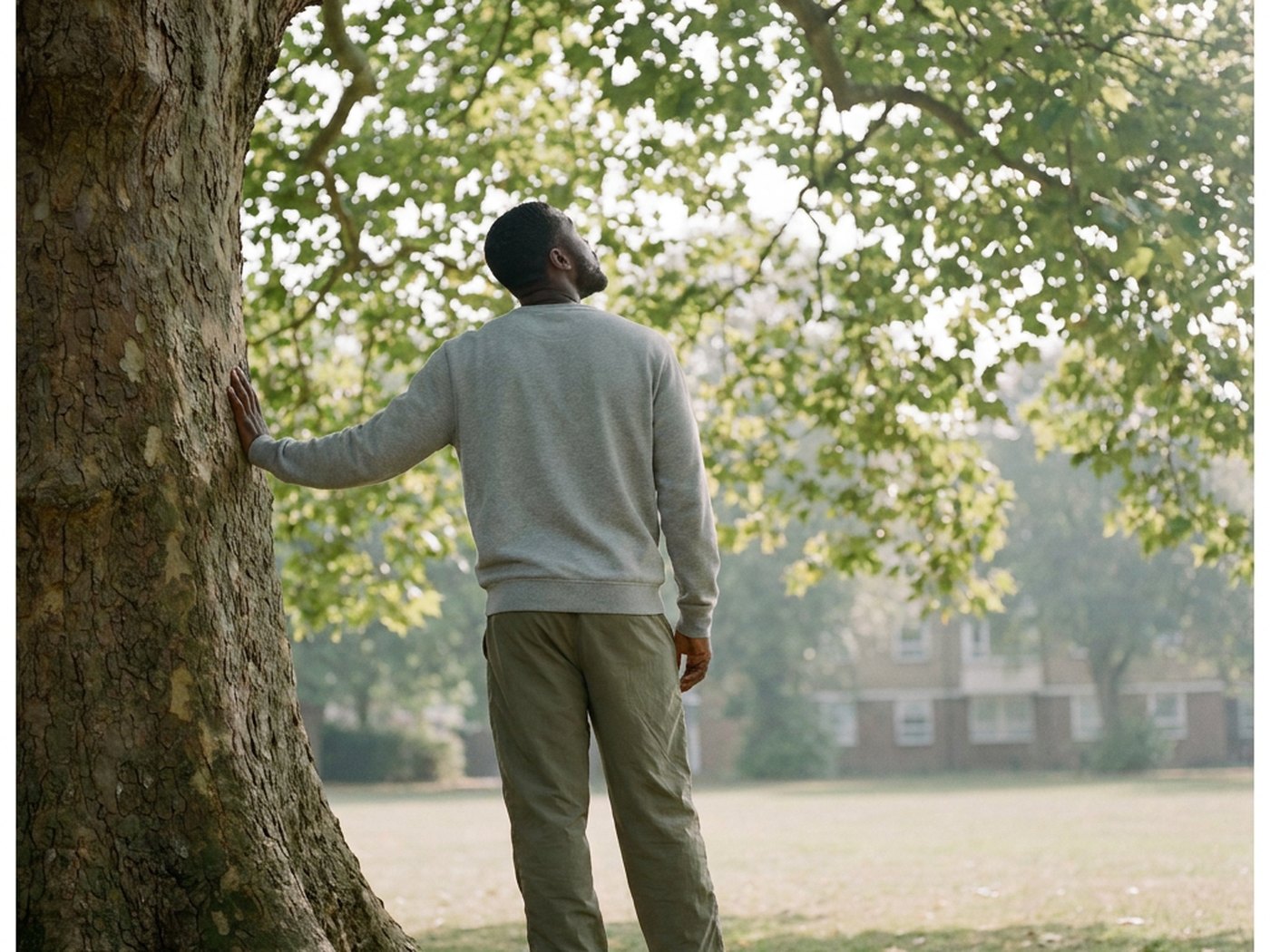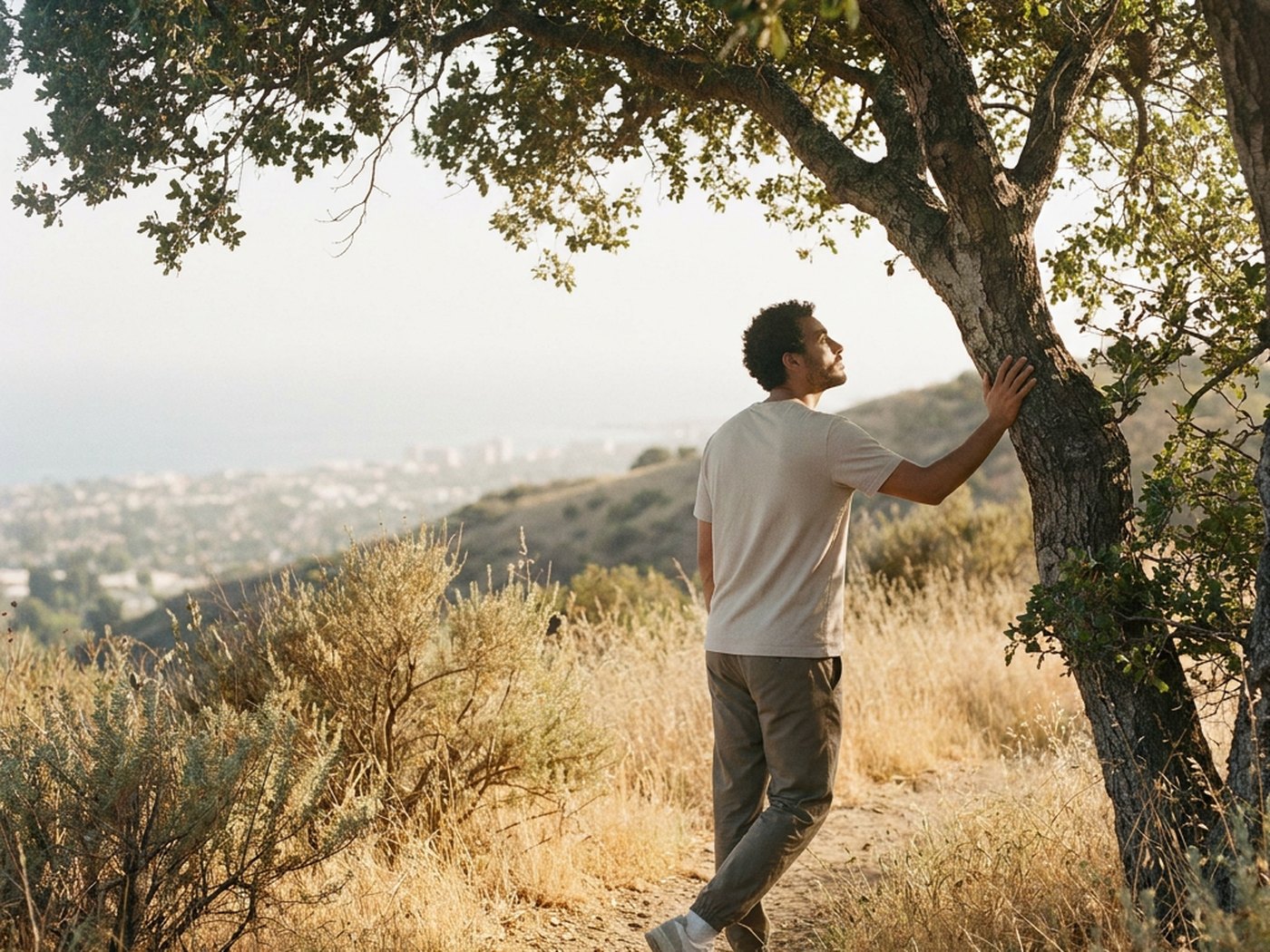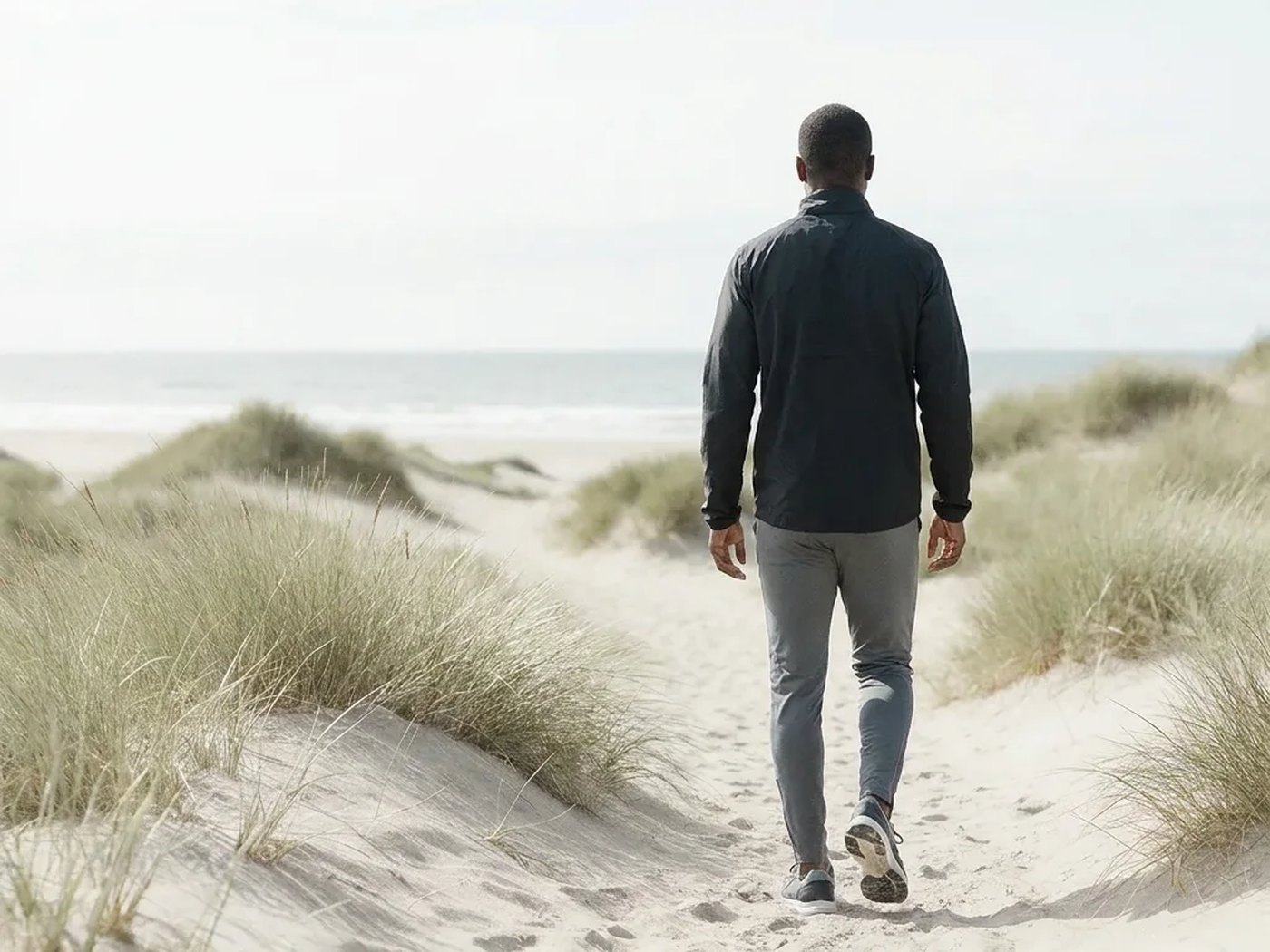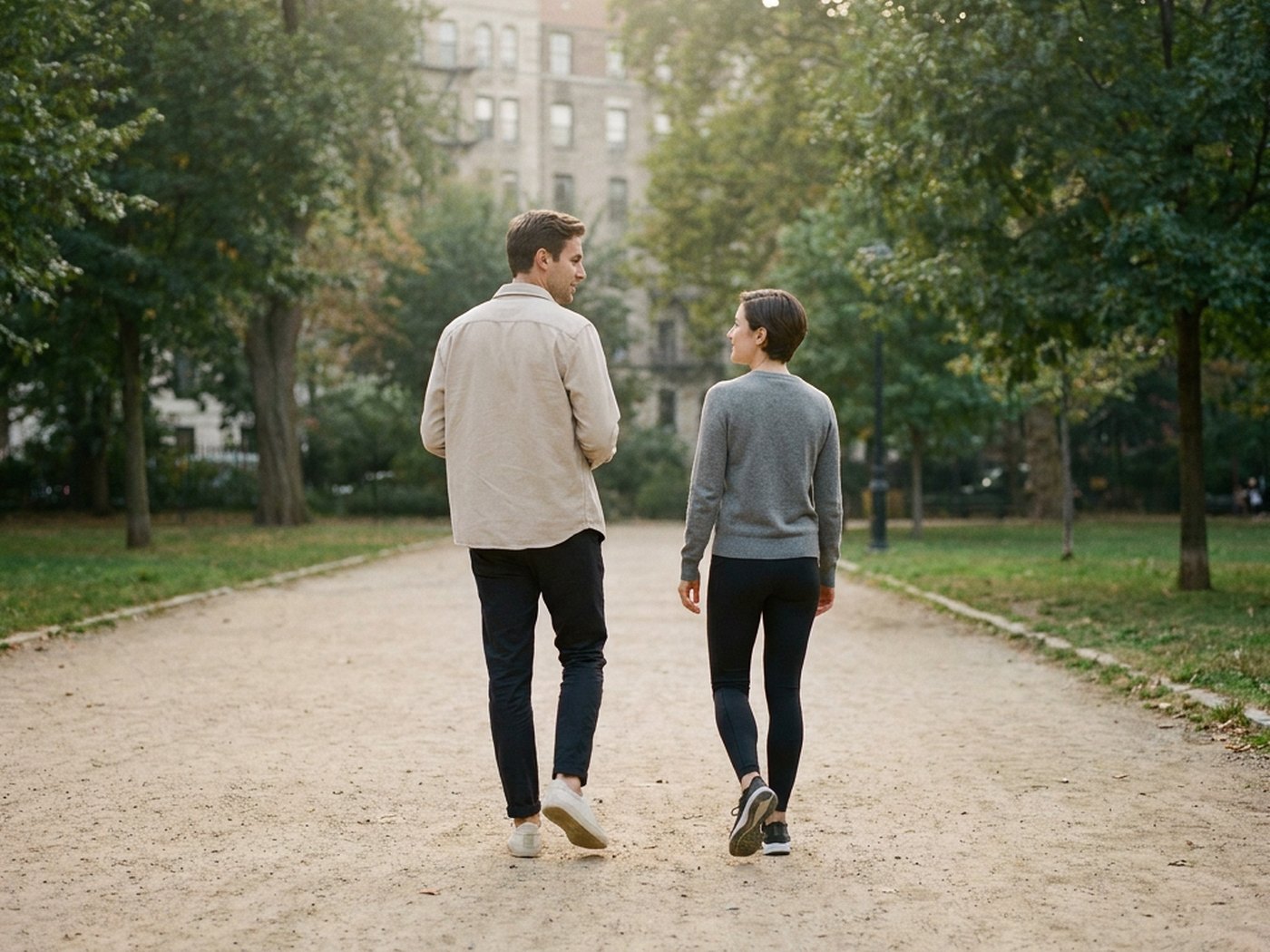

Morning light gets all the attention. What the 2026 research says about an evening walk and sleep, how late is too late, and a six-step walk to try.
You know the evening that goes like this. Dinner, a show, the phone in your hand, and then you lie in bed with a head that is still running. An easy walk after dinner is one of the simplest ways to close the day on purpose. It gives the day's thoughts somewhere to go before bed, and over a few months regular walking tends to add a little sleep through the night. The honest summary: promising and modest.
If you listen to Andrew Huberman, you know the morning rule: get outside early and let daylight reach your eyes. The body clock research backs it. But most of us have more time in the evening than at 7am. So is a walk at dusk good for your sleep, or is it too late in the day?
For many of us, this is what keeps sleep away: the body is tired and the head keeps going. The evening is when the day's leftovers come back: the reply you didn't send, tomorrow's list. There is some early evidence here. At Stanford, 38 adults took a 90-minute walk, half through grassland and oaks and half along a busy road. The nature walkers dwelled less on negative thoughts afterwards, and activity dropped in a brain area linked to that kind of brooding. The road walkers showed little change. In a 2026 trial in Zürich, 354 adults took 30-minute walks, and people reported fewer looping, worried thoughts during the walk than in their daily lives, on forest and street walks alike.
Both studies measured how people felt during or right after the walk. Step 5 below builds on that: give the thoughts their turn early in the walk, hours before bed, then turn your attention outward. More in what a walk does for the thought that won't finish.
What about the sleep itself? The most direct evidence is new. A 2026 review pooled eight randomized trials with 683 middle-aged and older adults who took up regular walking programs. Only a few of those trials tracked sleep with a device, and in those, walkers slept about 34 minutes longer per night and spent about 12 fewer minutes awake after first falling asleep. They did not clearly fall asleep faster, and their own ratings of their sleep did not clearly change. Walks of 30 minutes or more may help more than shorter ones, though that hint comes from a smaller slice of the trials. The authors call the evidence limited, which is fair with so few trials.
A second 2026 review looked at how people rated their own sleep, this time across adults, many of whom already slept poorly or were living with a health condition. Across 21 randomized trials with 1,707 adults, walking seemed to improve self-reported sleep quality, and the people who started with the worst sleep improved the most. From those trials, the authors suggest walking at moderate intensity three to five times a week, 30 to 60 minutes at a time, for three to six months. They rate their confidence in this as very low: people judged their own sleep, knew they were walking, and the trials differed a lot.
Zoom out further and walking holds its own. A large analysis of 200 exercise trials found that, compared with other activities, walking was among those with the largest benefits for self-rated sleep quality, alongside qigong and interval training. Again, people who slept poorly to begin with gained the most, and again the certainty is very low. Walking is the gentlest option on that list, so you don't need anything strenuous.
So the pattern leans one way: regular walking, over a few months, tends to nudge sleep in a good direction, more for some people than others. Step counts are more mixed: in a 2026 review, programs that raised daily steps went with longer, less disturbed sleep, while people who simply walked more in daily life tended to sleep slightly less. In the trials, most of the walking happened in the morning or during the day, so they say little about evening walks. That question has its own research.
The old advice was to avoid exercise in the evening. The evidence doesn't back that up for most of us. A review of 23 studies on a single evening session found that evening exercise did not harm sleep overall. The one warning sign was vigorous exercise ending within about an hour of bedtime, and even that finding is fragile. A newer 2026 review that compared morning and evening exercise found no clear overall advantage for the morning, but evening exercise was linked to a little more time awake in the night than morning exercise, especially at higher intensity, a result the authors treat with caution.
Intensity and timing work together. One study followed 14,689 physically active adults wearing a wrist-worn fitness tracker for a year, more than four million nights in all. Later and harder exercise was linked to falling asleep later, sleeping less and a higher resting heart rate overnight. Exercise that ended four or more hours before sleep showed no link with sleep, however hard it was. When light or moderate exercise ended more than about two hours before people's usual sleep time, they fell asleep about as early and slept about as well as on nights without exercise. Inside the last two hours, even light exercise left the body a little less settled during sleep. Compared with an all-out session two hours before bed, a light one went with falling asleep about 36 minutes earlier. The study lists a brisk walk as one example of light exercise. So the timing that fits the research is simple: aim to be back about two hours before bed.
There is one more thing to know about evening exercise. In a 2025 statement on the body clock, the American Heart Association describes light as the main cue for the body clock and exercise as a secondary one, with workouts earlier in the day tending to move the clock earlier and evening workouts possibly moving it later. So keep the walk after dinner steady and unhurried, as a way to wind down.
For many of us the evening is peak screen time. In a lab study, adults who read on a light-emitting tablet for a few hours before bed took longer to fall asleep, released less of the sleep hormone melatonin and had a later body clock than when they read a printed book. A 2026 trial with 24 adults found a more modest effect: people fell asleep about six minutes faster on nights without devices in the two hours before bed. An evening walk swaps that screen glow for fading daylight and dim streets.
Natural light keeps the body clock close to the sun. When researchers sent people camping with no electric light at all, their internal night shifted to begin around sunset, and the night owls in the group shifted the most. A walk at dusk won't do what a week in a tent does. It may still add a little of the light pattern your clock expects, in place of more screen.
Probably not on its own. In the 2026 review of eight walking trials, walking showed no clear effect on how long it took to fall asleep, though only two trials measured it. What changed was how long people slept and how much of the night they spent awake. The authors suggest that falling asleep may depend more on how busy your mind is at bedtime, which is where a practice like step 5 comes in.
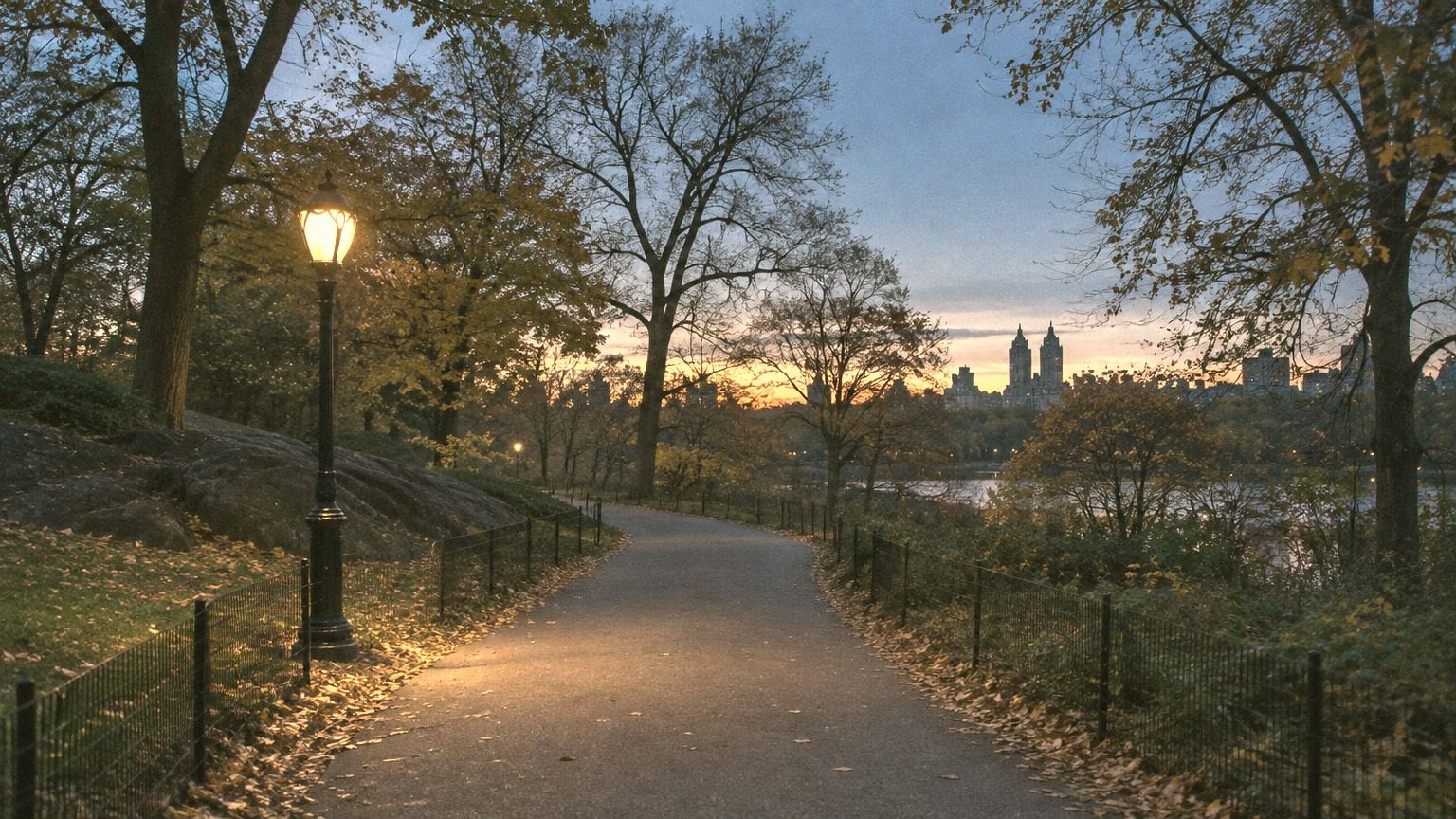
No. A lit street or a well-used park path works. The dark changes what you notice, and it is still worth going. More in nature in winter, rain and dark.
Yes. Most of the walking in these trials was simply regular walking, and morning light helps set the body clock too. A lunch-break walk and an evening walk can both be part of the same week.
The reviews suggest people with poorer sleep gain the most from regular walking. If sleep is a long-running problem, talk to a doctor. A walk is something to add alongside that, not a replacement for it.
Start a guided walk in the Mindtrek app. It gives you a few prompts for the first minutes, then leaves the evening to you. Your first three guided walks are free.
And if you are in New York, Ease & Ground in the City is a 35-minute Trek built for coming down from a busy day.
On the science: every study here is real. The underlined phrases link straight to the papers, and the full list is below. The summaries and takeaways are my own reading, simplified to be useful rather than complete.
Try a guided walk today
Short guided walks for any street, 5, 10 or 20 minutes. Your first 3 are free.



Field Notes by email
The research on walking and being outside, read for you and kept short. New Treks and what we are building, too.
By subscribing you agree to our Terms and Privacy Policy. Unsubscribe anytime.
Field Notes are the research. Mindtrek is the practice: guided walks and Treks built on the same studies. Free to start on iPhone and Android.
Get the app