Brain scans show a 90-minute nature walk quiets the exact region that drives repetitive negative thinking. Here is what that means in practice.
Rumination is the thought that will not finish. You replay the conversation, rehearse the reply, go back to the start. It feels like problem solving and it is closer to a loop. Psychologists consider it one of the main engines behind both anxiety and depression, and it is one of the few mental patterns where the research on walking is direct rather than suggestive.
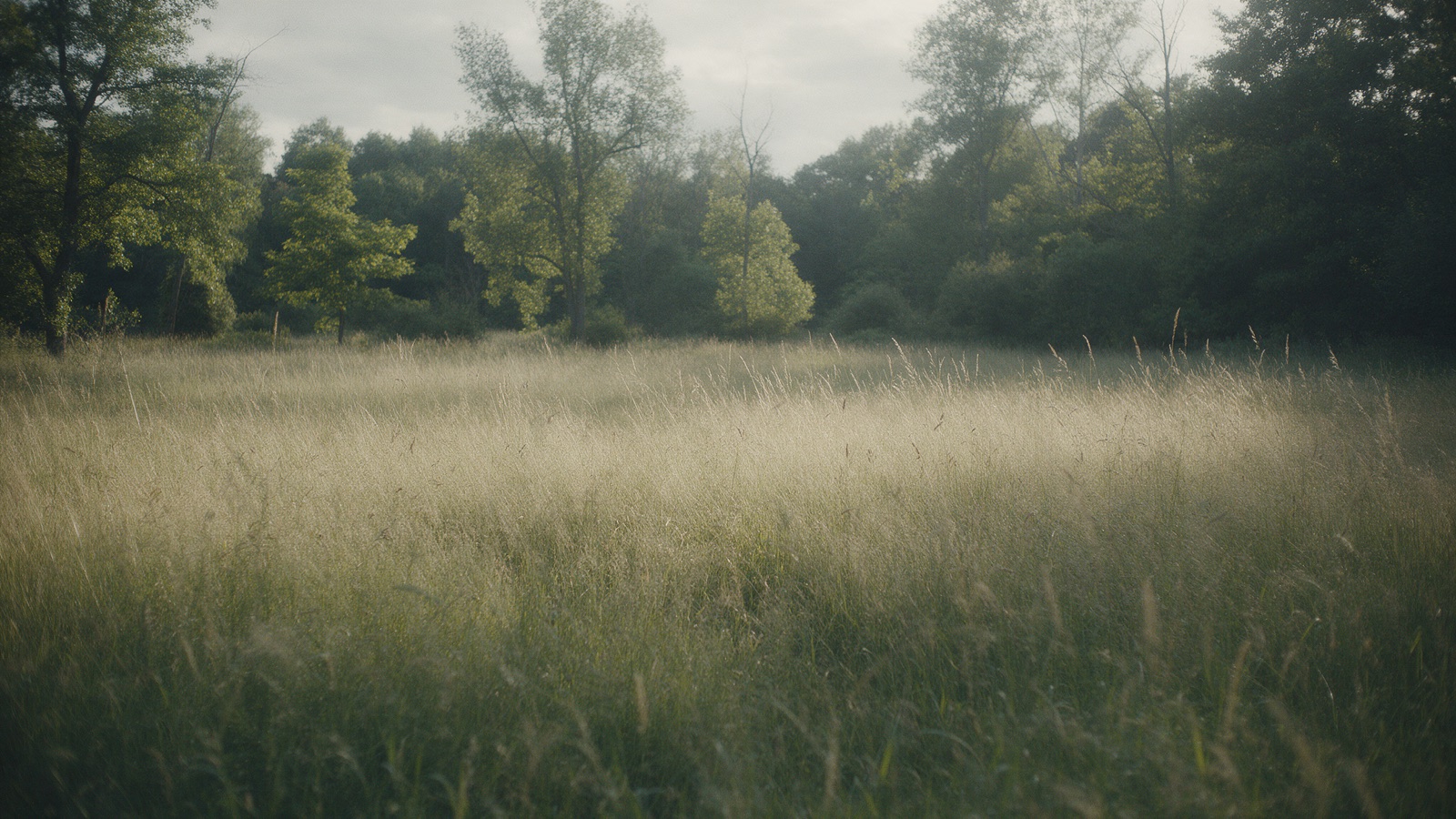
Bratman and colleagues (2015) sent 38 healthy adults on a 90-minute walk. Half walked through grassland with scattered oaks near Stanford. Half walked along a four-lane road. Before and after, participants filled in a rumination questionnaire and had their brains scanned. The nature walkers reported less rumination afterwards, and their scans showed reduced activity in the subgenual prefrontal cortex, a region that lights up during self-focused negative thinking and is overactive in depression. The urban walkers showed no change on either measure.
This was a small study with healthy participants, so it shows a mechanism, not a treatment. It is still one of the cleanest demonstrations of a physical route into a mental pattern.
Lopes, Lima and Silva (2020) replicated the rumination-reducing effect of nature contact and then asked what carried it. The answer in their data was awe and improved mood: contact with nature raised both, and both reduced rumination.
Berman and colleagues (2012) worked with 20 people diagnosed with major depressive disorder. Each was asked to think about a painful unresolved memory, then walked for about 50 minutes either through an arboretum or through downtown Ann Arbor, on separate days. After the nature walk their working memory span improved by about 16 percent relative to the urban walk, and mood improved more. The researchers had expected that priming rumination would blunt the effect. It did not.
Kotera and colleagues (2021) reviewed twelve studies of nature walks and found reductions in state anxiety and depressive symptoms across most of them. Ma, Lin and Williams (2024) reviewed nature-based walking interventions and found improvements in mood, optimism and wellbeing, with reductions in stress, anxiety and rumination, and a small extra benefit for anxiety over walking in urban settings. Both reviews note that many studies are small and short. The direction is consistent. The size of the effect is still being pinned down.
The mechanism here is attention leaving the self, and that can happen sitting down. Sit somewhere with a wide view. Name five things you can see that will outlast you. It sounds small. It is the same move the studies made.
No. The Ann Arbor study showed a single walk improves cognition and mood in people with depression, which is meaningful, but nobody has shown walks replace therapy or medication. Think of it as something that helps alongside treatment.
The researchers' explanation is that streets demand directed attention: traffic, people, signs. Nature holds attention softly, which leaves room for the mind to settle. The next article on creativity covers this mechanism in detail.
The studies measured immediately after the walk. Repeated walks over weeks are the reasonable bet for a lasting change, but that has been studied less.
Back to Yourself is a 55-minute walk in Prospect Park written for exactly this state, scattered to grounded.
On the science: every study named here is real and linked below. The summaries and takeaways are my own reading of them, simplified to be useful rather than complete. Where a detail matters to you, the paper is one click away.