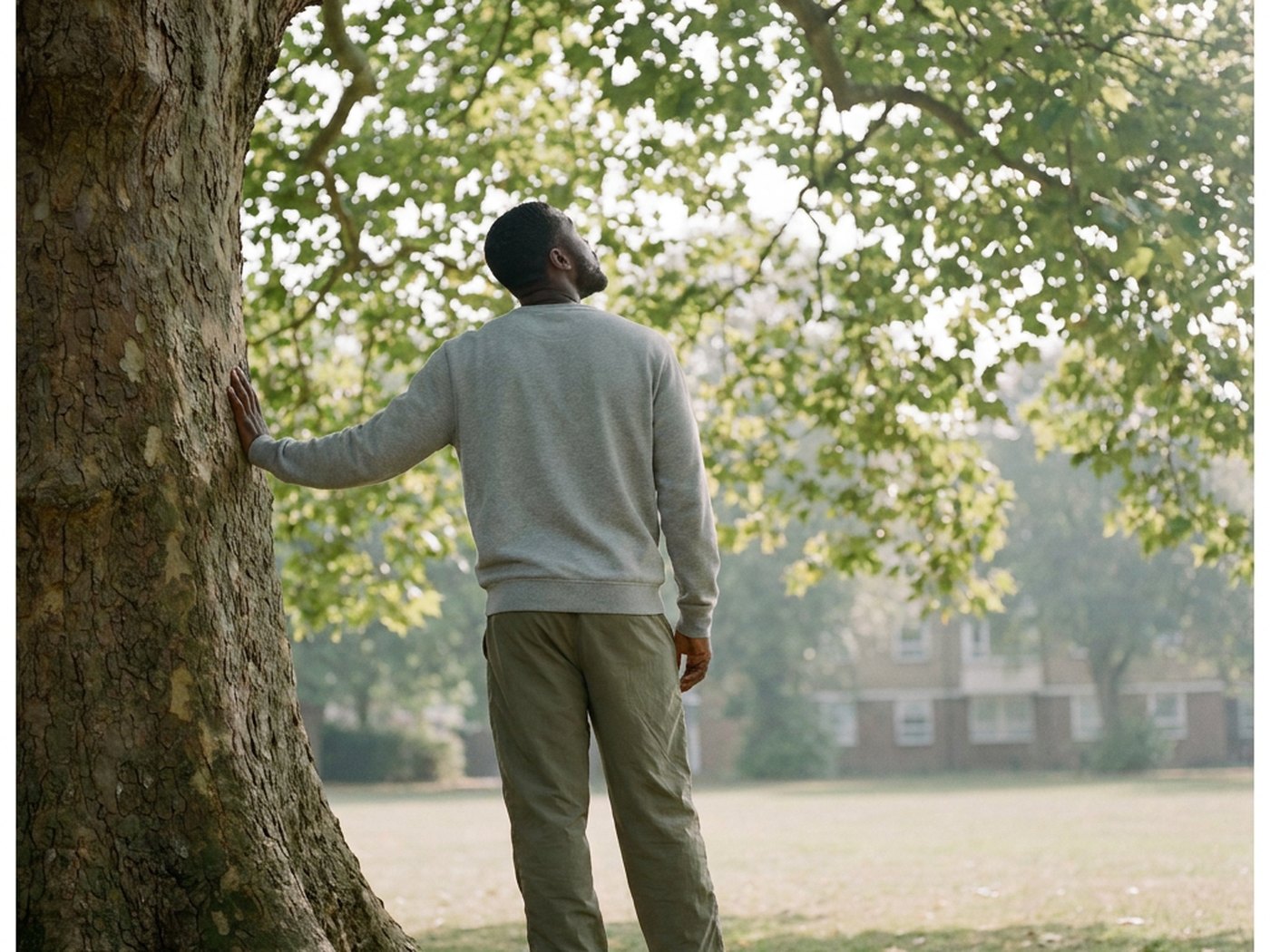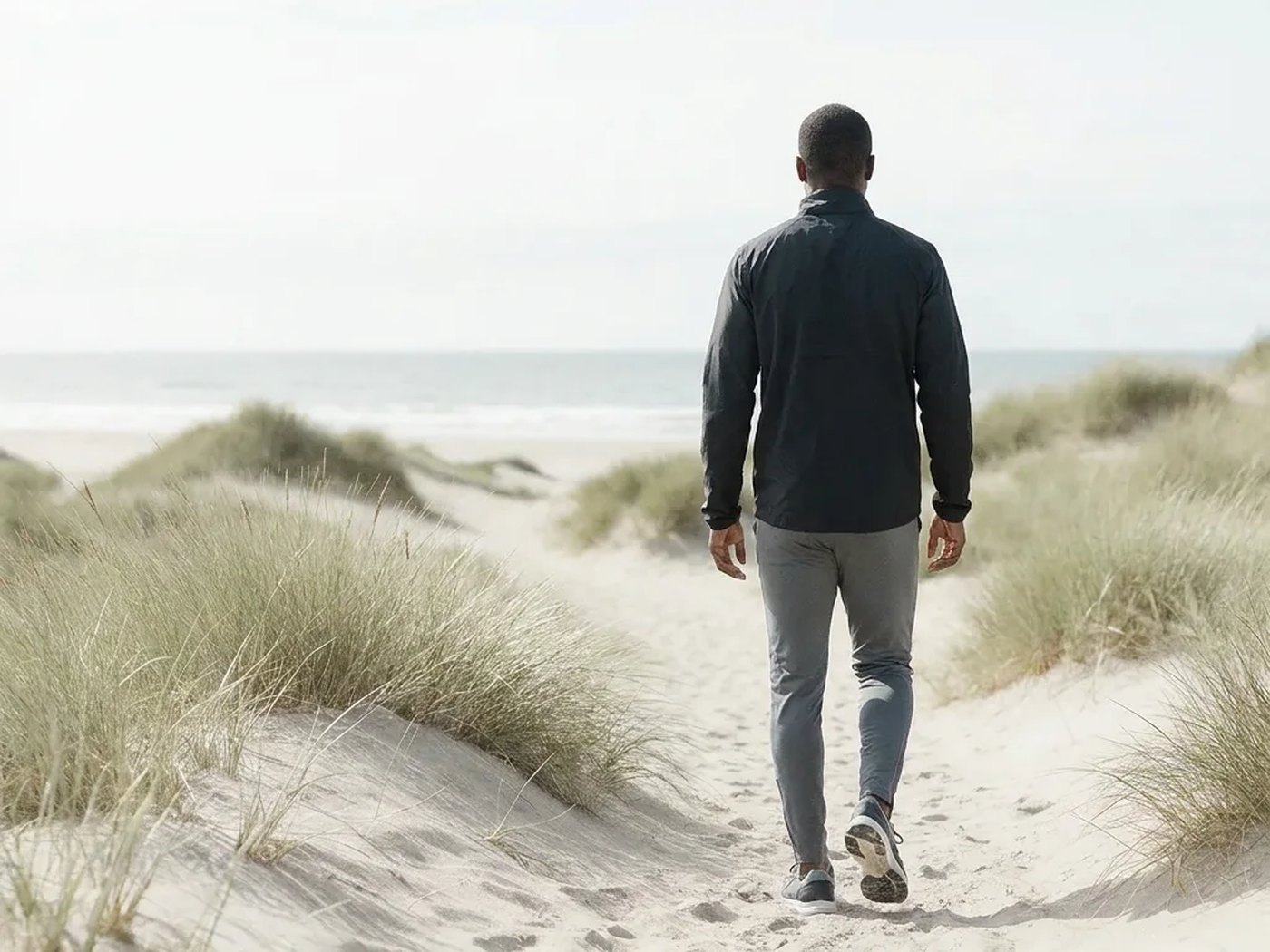

You already know a walk would help, and half the people who mean to go never do. Three small fixes from the research get you out the door and make the walk count.
To motivate yourself to go for a walk, stop waiting to feel like it. Decide when and where before the moment comes, give the walk one job, and keep your phone out of your hand. Wanting to go matters less than most of us think, and those three small moves matter more.
The most common thing people say when I tell them what I build is some version of: walking is free, I do not need an app for it. They are right about the first half. Nobody needs a subscription to put on shoes. The second half is where it gets interesting, because if walking were enough on its own, all of us would already be doing it, and the walks we do take would leave us feeling the way we hoped.
Three things get in the way, and each has been measured.
Three findings explain most of it: wanting to go is a weak push, one instruction changes what a walk does for your head, and a phone within reach takes a share of your attention even when you ignore it.
Start with the gap between wanting and doing. A team at the University of Victoria pooled ten studies of nearly 4,000 people who had been asked whether they intended to be physically active, then followed to see whether they were. Among the people who intended to be active, 46 percent did not follow through. Slightly fewer succeeded than failed. Intention, in other words, was worth about a coin flip.
The psychologists who have spent longest on this problem, at Sheffield and North Carolina, put it more bluntly in a review of the whole field: the gap is made almost entirely of people who meant to act and did not, and raising motivation barely moves it. A large change in how much people wanted to do something produced a small change in whether they did it.
What did move it was mundane: deciding in advance when, where and how, so that the moment arrives already decided. Even forgetting is part of the story. In one study they cite, 8 percent of people forgot an intended action after a five-second delay, and 24 percent when their attention was divided.
That is the first half of the objection answered. Walking is free. Starting is not.
Now the walk itself. At the University of Michigan, 117 adults were put on a two-week outdoor walking program. Half simply walked. The other half were given short engagement strategies to use on the way: notice something you have never noticed, imagine the route as a stranger would see it, pay attention to how your body is moving. The strategy group gained more attention and lost more frustration, and the difference was biggest for people walking through less natural surroundings, which is most of us on most days. The motion was identical. What changed was what the walker did with their attention.
It is not a magic trick, and the honest version includes the study that complicates it. Finnish researchers ran two field studies in a forest and a city park, nearly 250 walkers in all, half of them given psychological tasks to do along the way. Mood and felt restoration improved after every walk, tasks or not, while sustained attention improved most reliably with the tasks. So the walk does a lot of the work by itself. The instruction sharpens what it does for the head.
Which brings us to the phone. A study of nearly 800 people at the University of Texas asked participants to do demanding attention tests with their own phone either on the desk, in a pocket or bag, or in another room. The closer the phone, the worse people did, even though it was silent and face down and nobody touched it. The desk was worst, the other room was best, and the pocket sat in between. The researchers called it brain drain: some part of the mind stays on the phone whether or not you use it.
That matters for a walk because attention is the whole mechanism. A 40-minute walk in nature, compared with the same walk on city streets, enhanced the brain signal that indexes executive control, measured with EEG before and after. Restoration is real and measurable. It happens to the attention you actually bring outside. Whatever part of it stays on the screen is attention the walk never gets.
So the fix is small: decide the walk before the moment arrives, give it one instruction, and put the phone out of the way.
Because wanting to go is a weak push. Across ten studies, nearly half the people who intended to be active did not follow through. The moment to leave tends to arrive when you are tired or busy, and a decision made earlier carries you past it better than motivation in the moment.
Decide it once and tie it to something you already do every day: after lunch, from the office door, ten minutes. Deciding when, where and how in advance does more than wanting it more. Keep the walk short enough that a bad day can still hold it.
No. If you already walk with your attention outside and come back clearer, you have the practice. Most of us have it on good days and lose it on the days we need it, which is exactly when a voice helps. If meditation apps never stuck for you, here is how a guided walk compares.
Ten minutes with a decided start, one instruction and the phone in your pocket is a real walk. If you can stretch it, twenty minutes outside is where the stress-hormone research saw the clearest drop. Either way, starting was the hard part, and that is behind you.
This is the reason Mindtrek exists, stated as plainly as I can: the phone goes in the pocket, a voice goes in your ear, and the walk you were already going to take gets an intention, an instruction and an end. That is a Stride: pick what is on your mind, choose 5, 10 or 20 minutes, and walk out of any door. Your first three Strides are free.
And if you are in New York, Return to Your Inner Child is a 35-minute Trek in Central Park built around noticing the way you did at eight.
On the science: every study here is real. The underlined phrases link straight to the papers, and the full list is below. The summaries and takeaways are my own reading, simplified to be useful rather than complete.

No Trek near you? Take a Stride.
Short audio walks for any street, 5, 10 or 20 minutes. Your first 3 are free.


Field Notes by email
The research on walking and being outside, read for you and kept short. New Treks and what we are building, too.
By subscribing you agree to our Terms and Privacy Policy. Unsubscribe anytime.
Field Notes are the research. Mindtrek is the practice: guided walks and short Strides built on the same studies. Free on iPhone and Android.
Get the app