
If sitting still to meditate makes your mind louder, take the practice outside. Walk at your own pace, notice one thing, and let the walk do the rest. Ten minutes is enough to start.
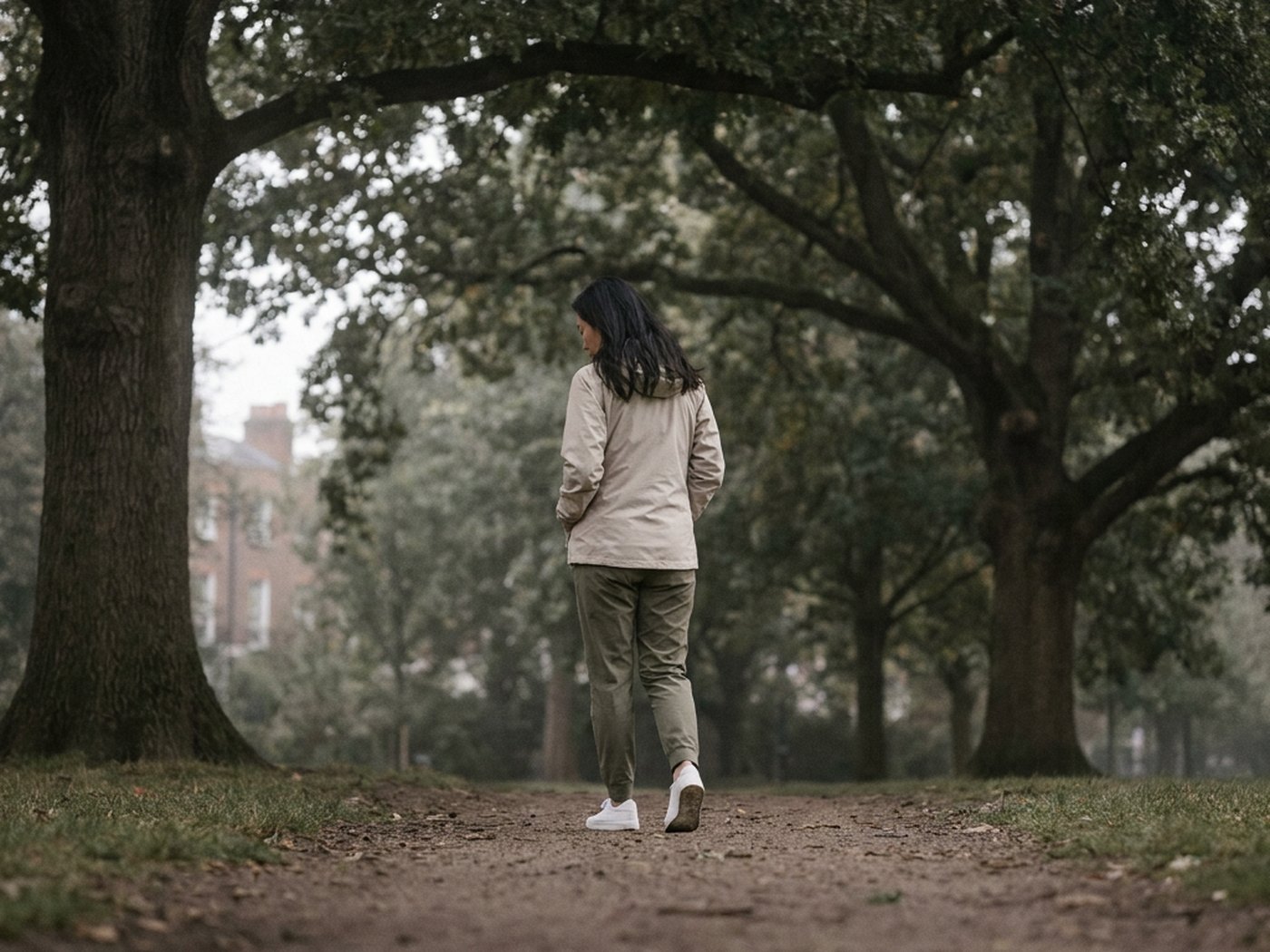
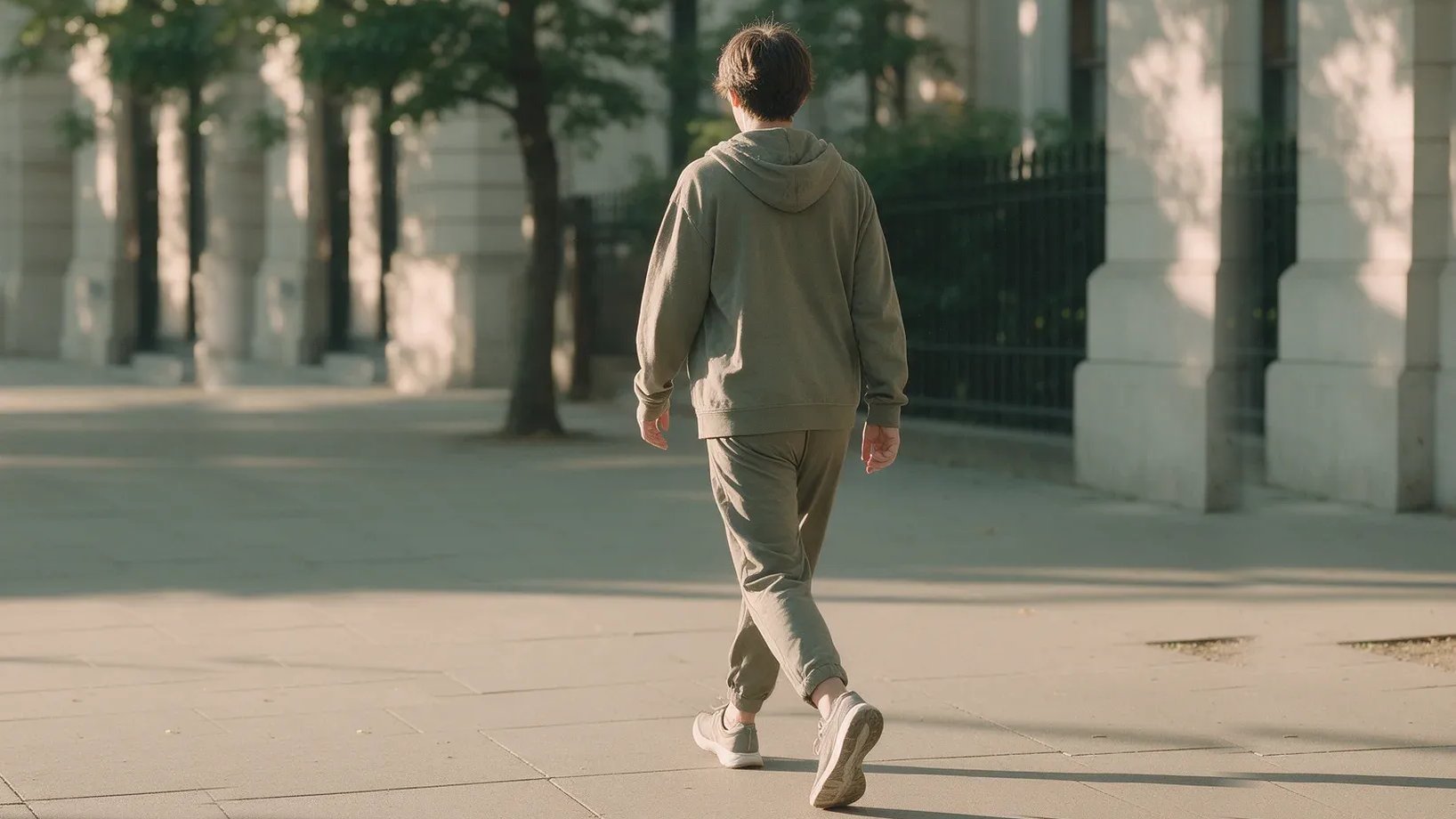
If you can't sit still to meditate, walk. Walking meditation is the same practice of paying attention, done on your feet: you pick one thing to notice, like your steps or the sounds around you, and come back to it whenever your mind drifts.
I came to it the hard way. Meditating indoors never worked for me. The moment I sat still, my head got louder. Walking outside is what finally gave it somewhere to go.
If that sounds familiar, your practice may simply need to move.
The research points one way: walking eases anxiety, a walk can be a mindfulness practice in its own right, and it works best outside with only a few instructions. Four findings carry most of that.
Walking itself helps. A 2024 review of 75 randomized trials with more than 8,600 people found that walking eased anxiety symptoms, indoors or out, alone or in groups.
The walk can be the practice. In a study across 37 sites with 2,239 people, a 15-minute mindful walk lowered stress about as well as a body scan or mindful breathing.
A few spoken cues help you stay with it. Walkers who heard short mindfulness instructions kept their attention on the walk, felt less wound up and enjoyed it more. More on that in what a voice in your ear does to a walk.
Outside adds something. Students in Iceland who walked in nature during exams came back in a better mood than those on a treadmill or watching nature on a screen.
Two limits keep this honest. A review of 12 nature-walk studies found that walks eased anxiety in the moment, with no change in long-running anxiety. And in a 2022 study, people given no instructions came back with the most attention restored. The researchers think the exercises took some effort of their own.
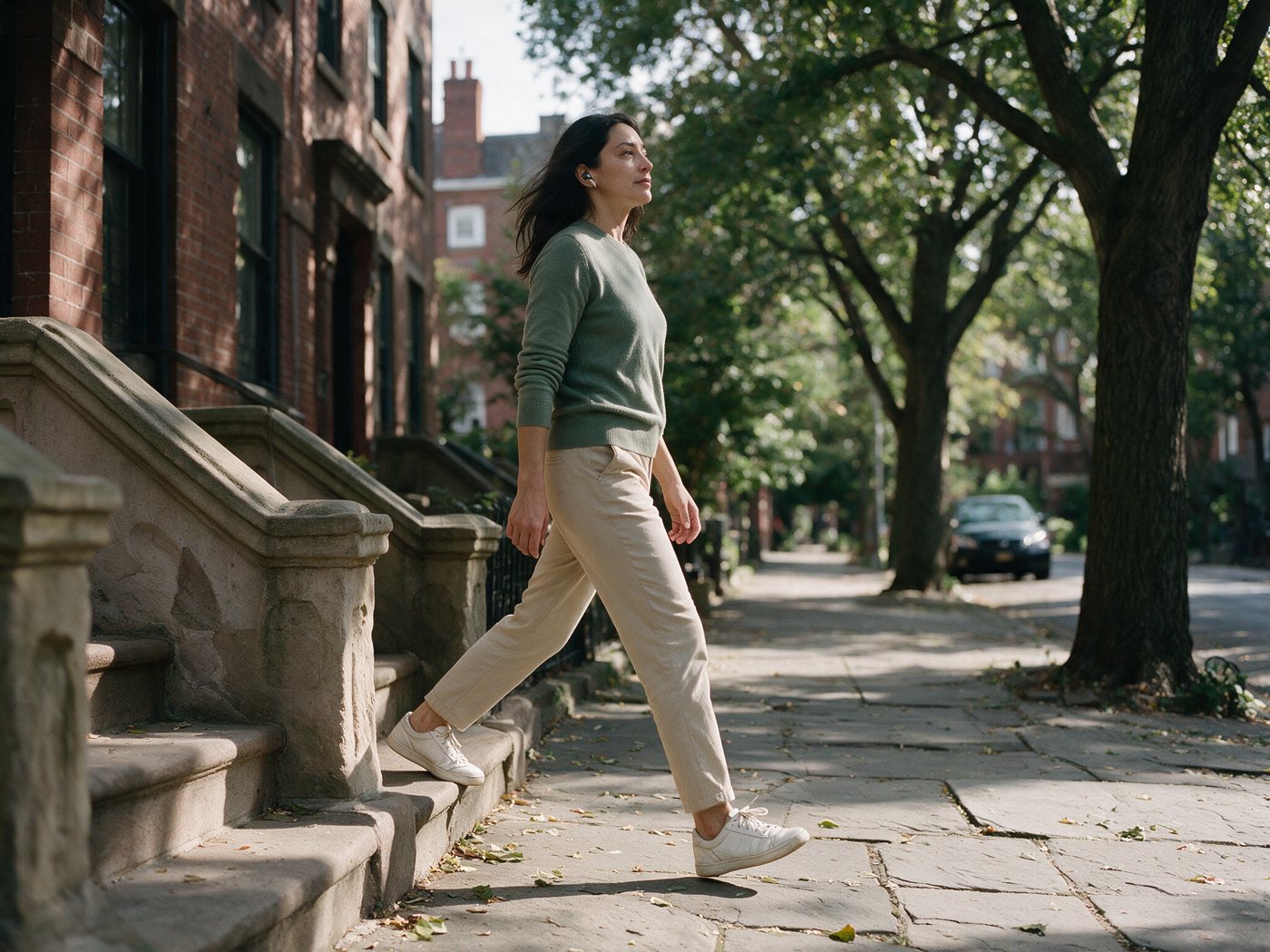
In practice, that means a walk is something to reach for when the day gets loud. Give it one cue, then let the quiet do the rest. Ten minutes on a street with trees is a good place to start.
You need ten minutes, a door and nothing else.
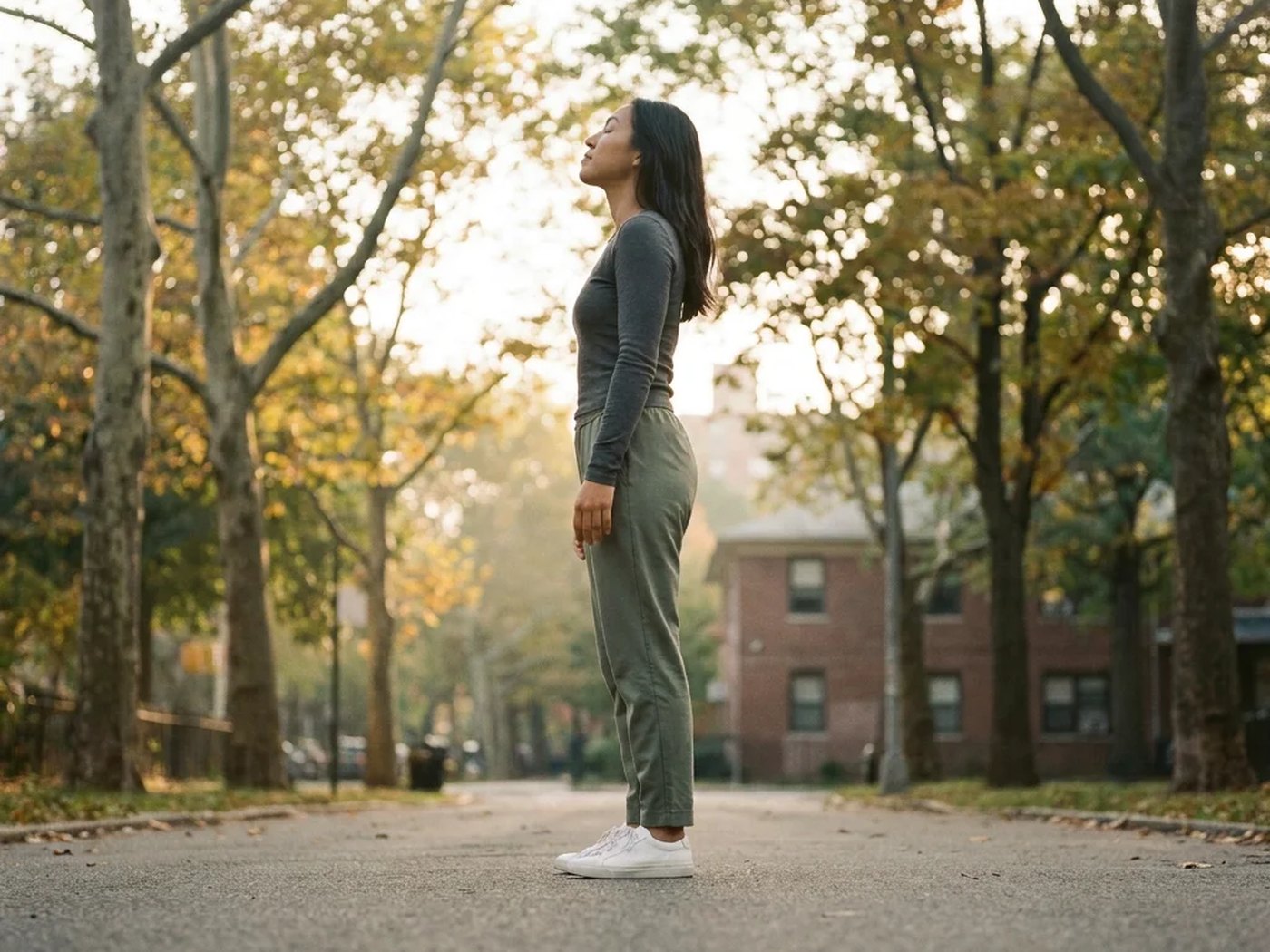
The walk is the stronger version, because the movement and the change of scene do part of the work for you. On days you can't get out, stand instead of sitting. Go to an open window, feel your weight in your feet, and name five things you can see, from the nearest to the farthest away.
Walk, and make the walk your meditation. Pick one thing to pay attention to, like your feet or what you can hear, and come back to it each time your mind drifts. Ten minutes is enough to start, and it is still meditation when you are moving.
For lowering stress in the moment, a 15-minute mindful walk worked alongside three still practices in a study across 37 sites. The better practice is the one you will actually do. If you skip the cushion and never skip a walk, walk.
The best one is built for walking outside, keeps its instructions short and leaves you long stretches of quiet. That is what I built Mindtrek for: a short Stride with a mental fitness coach in your ear, 5, 10 or 20 minutes from any door, and free to try for your first three walks.
If your mind runs in circles more than it races, this note on rumination covers what a longer walk does for a thought that won't finish. And for a flat loop where you never have to think about directions, Ease & Ground in the City circles the Great Lawn in Central Park in about 35 minutes.
On the science: every study here is real. The underlined phrases link straight to the papers, and the full list is below. The summaries and takeaways are my own reading, simplified to be useful rather than complete.

No Trek near you? Take a Stride.
Short audio walks for any street, 5, 10 or 20 minutes. Your first 3 are free.


Field Notes by email
The research on walking and being outside, read for you and kept short. New Treks and what we are building, too.
By subscribing you agree to our Terms and Privacy Policy. Unsubscribe anytime.
Field Notes are the research. Mindtrek is the practice: guided walks and short Strides built on the same studies. Free on iPhone and Android.
Get the app