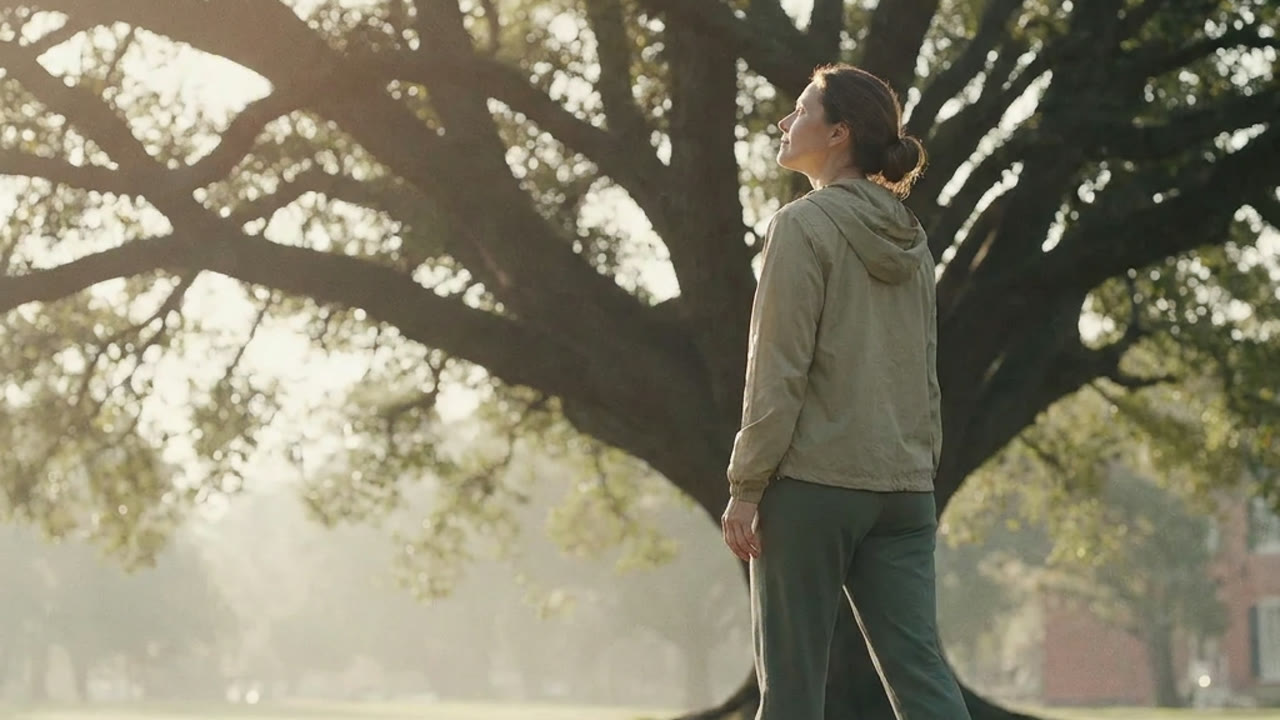
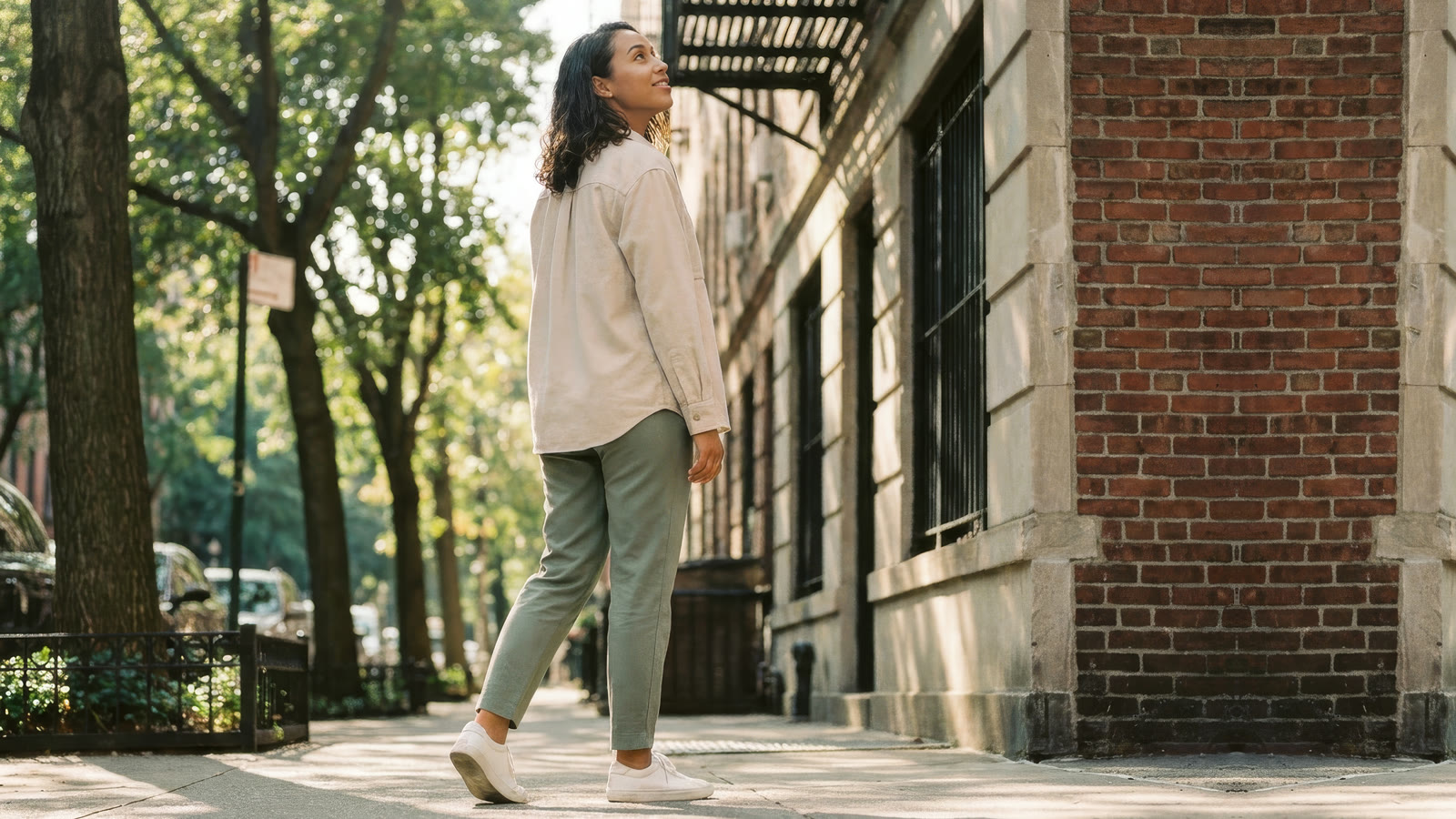
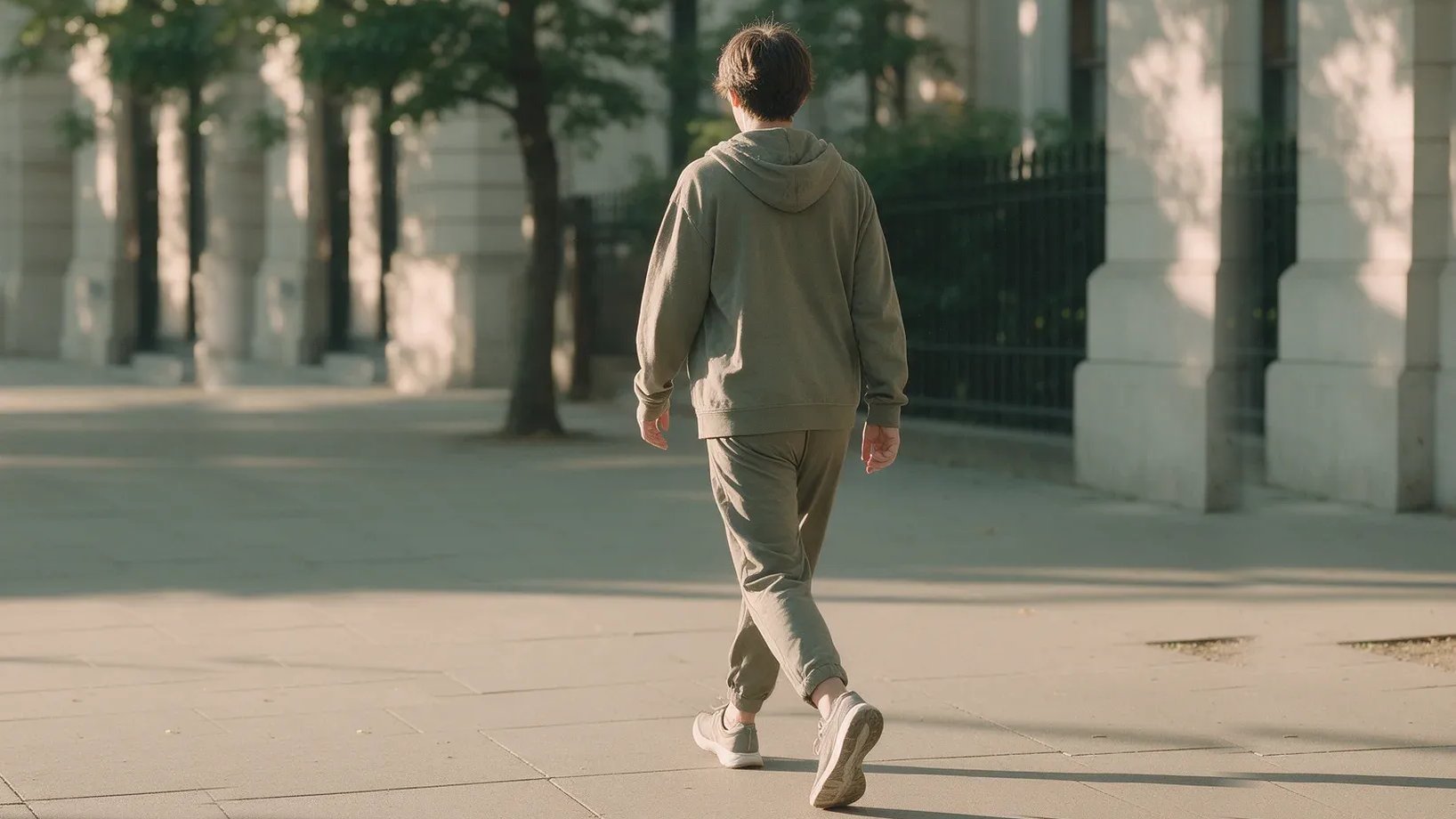
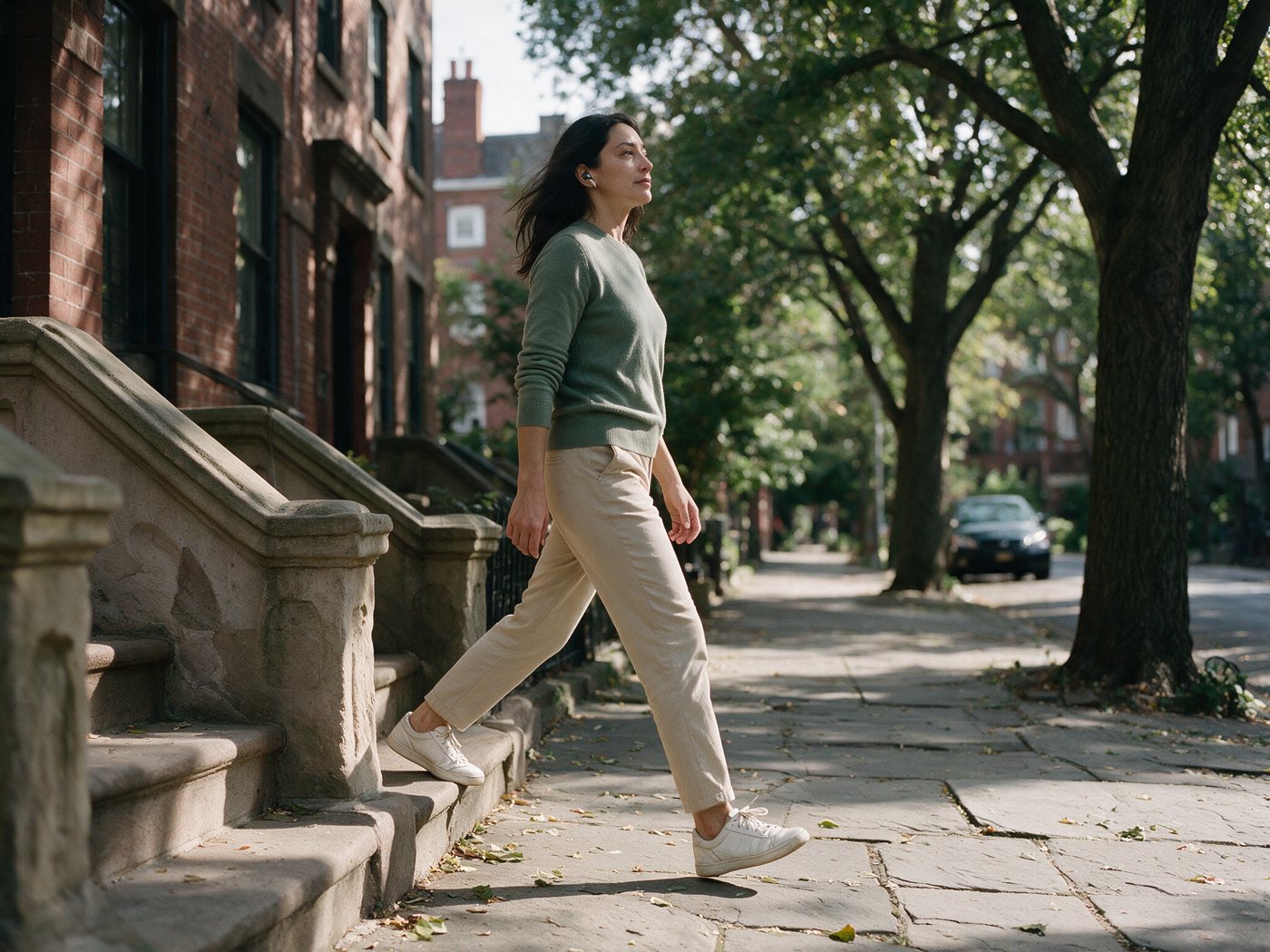
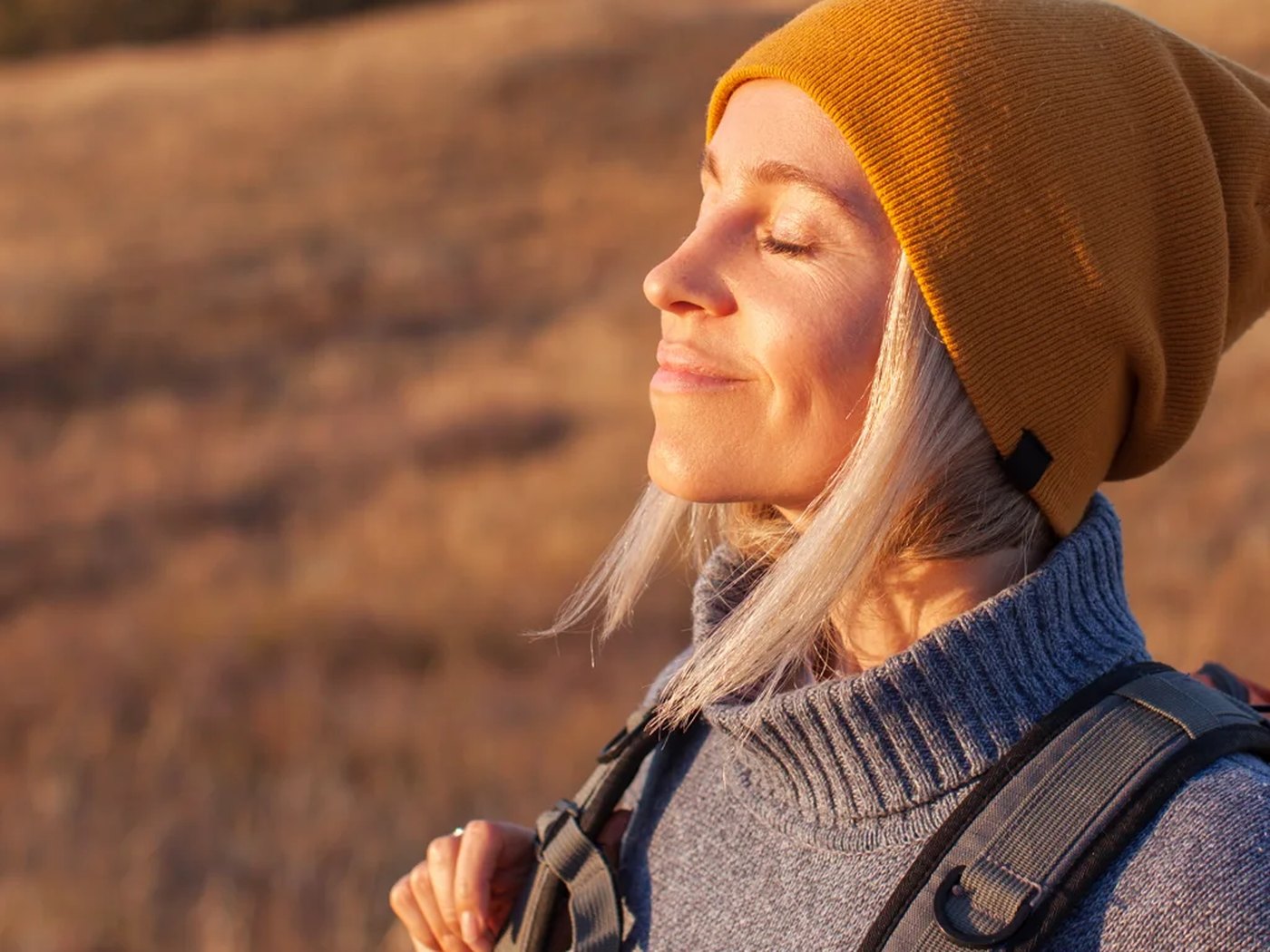
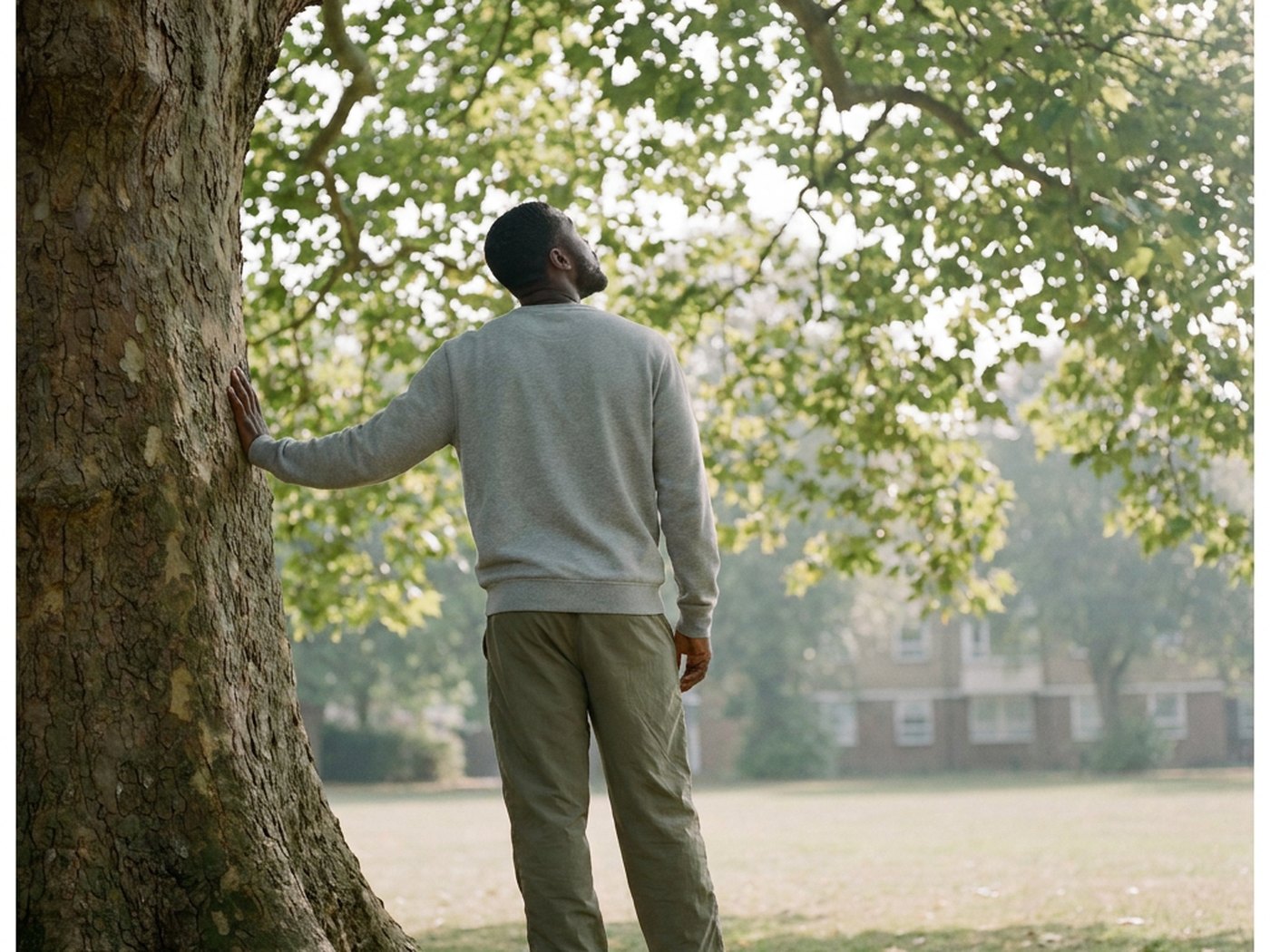
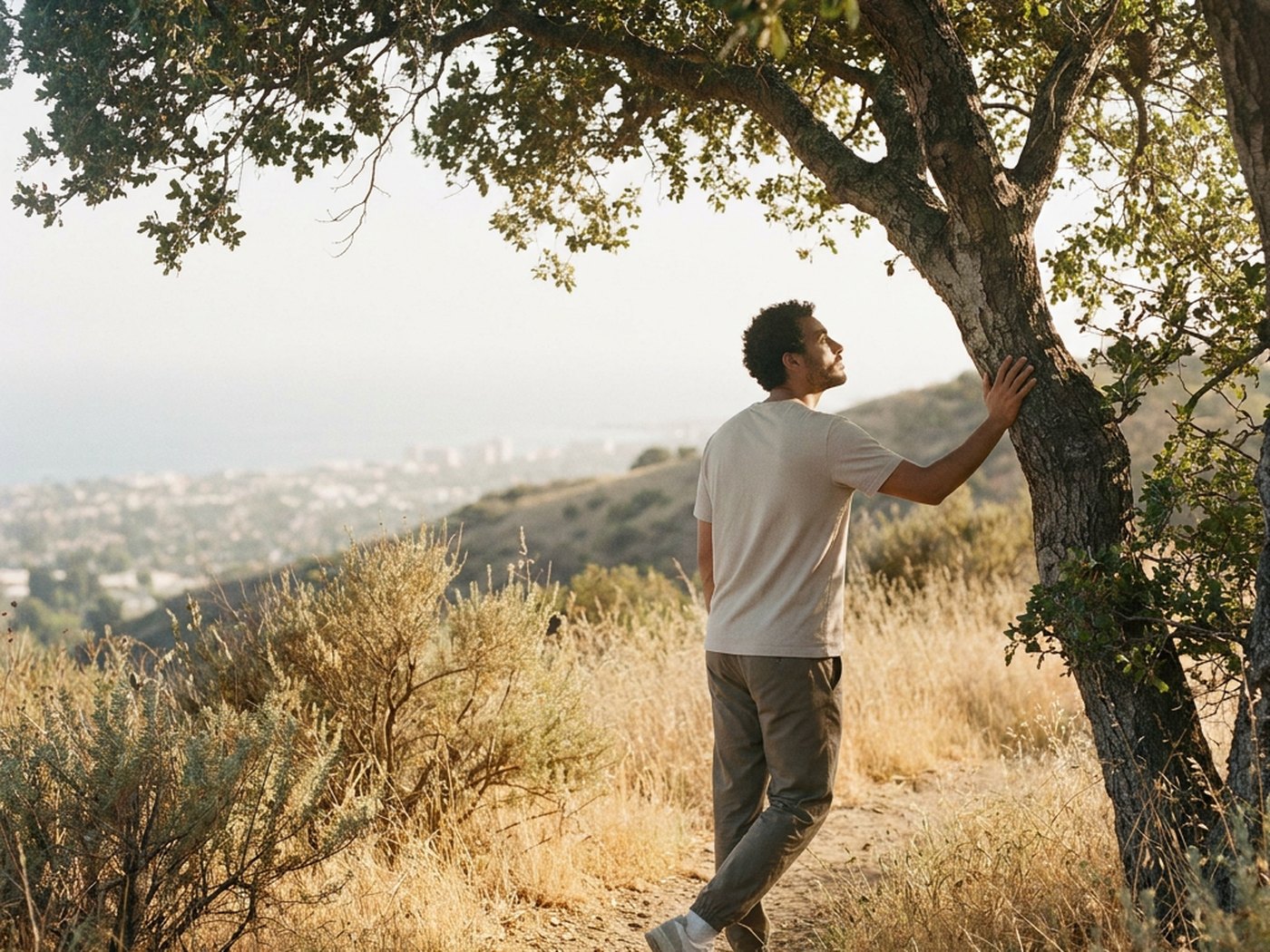
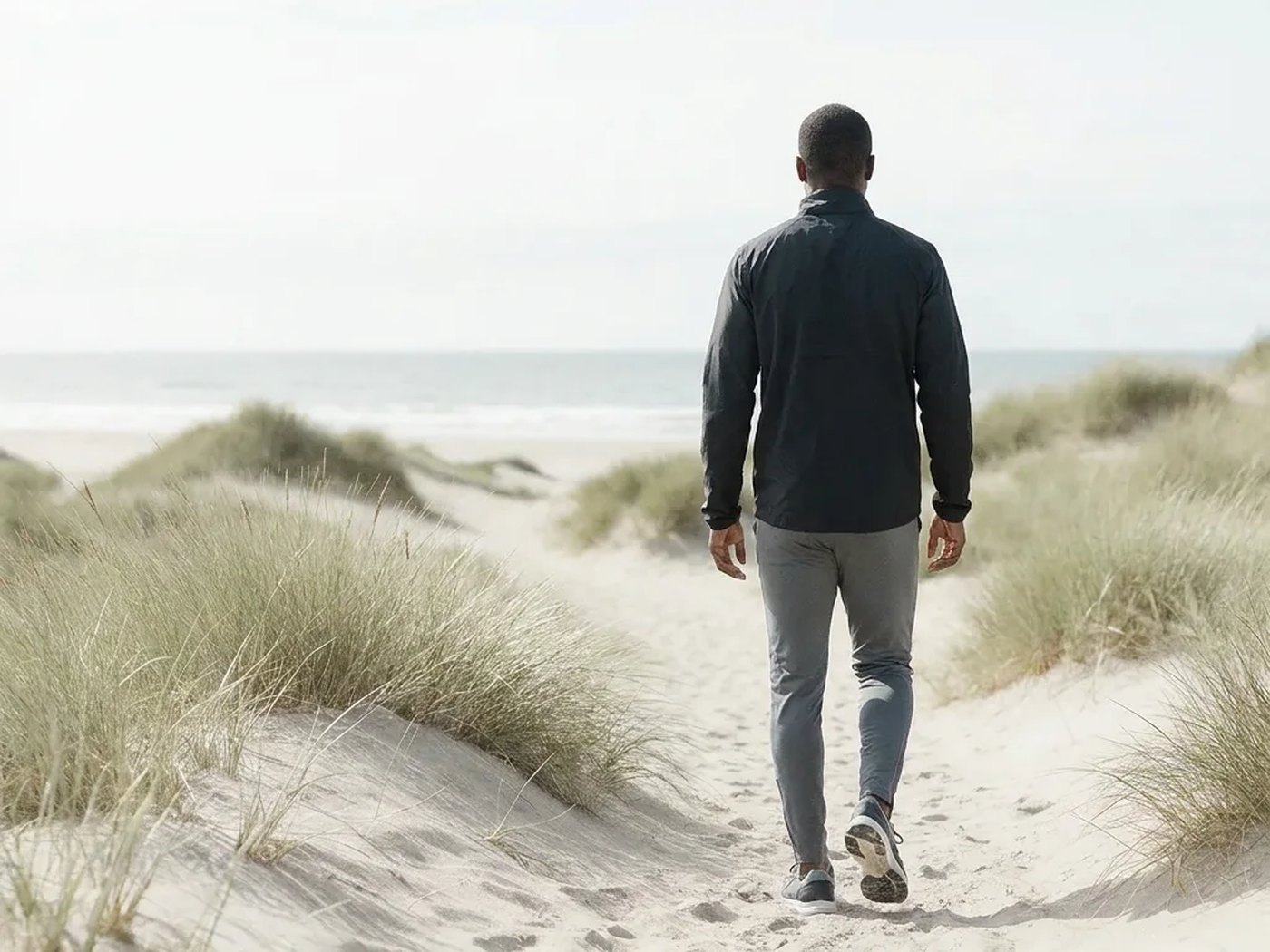
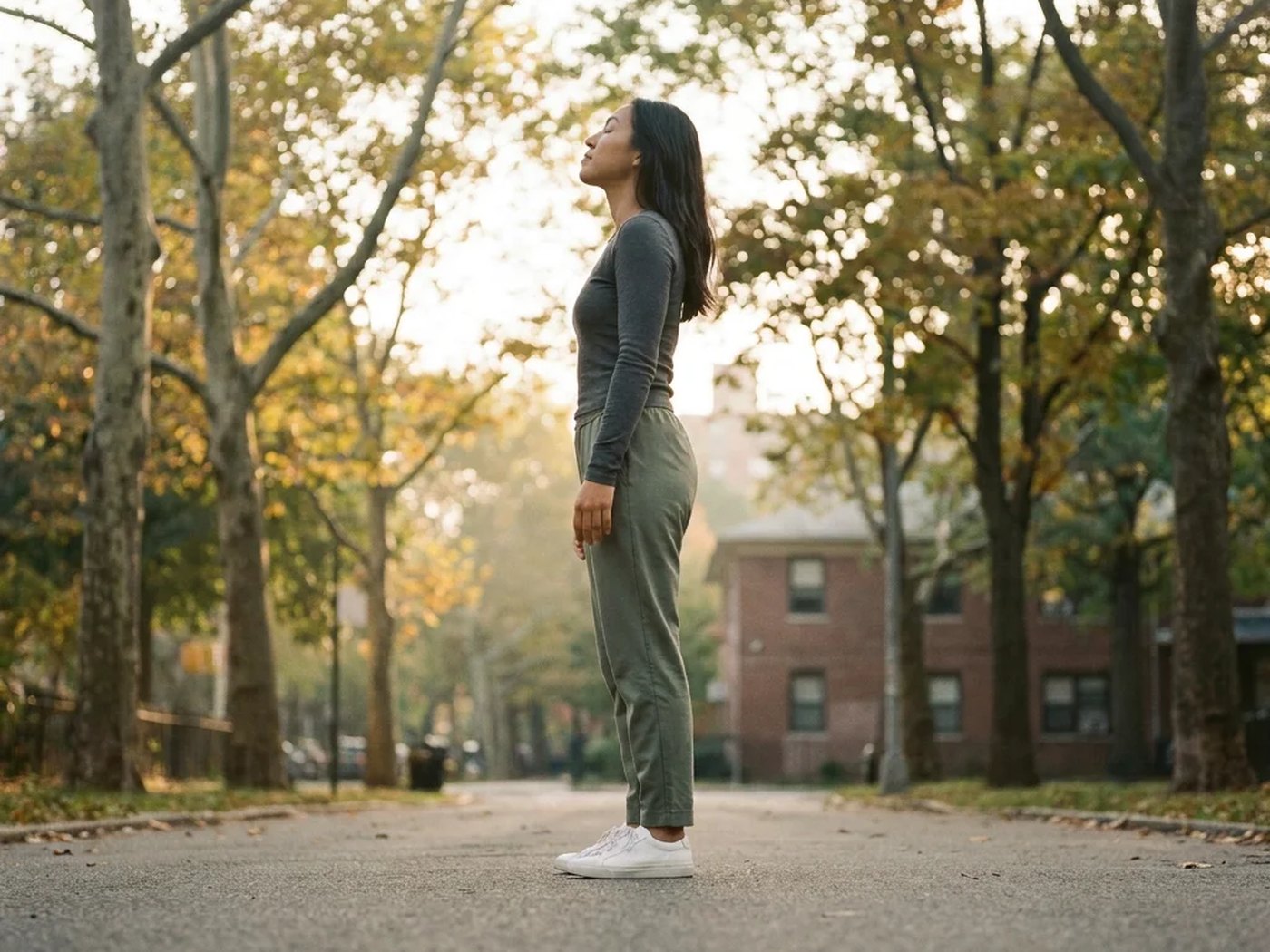
Walk a little slower, feel your steps, and come back when your mind drifts. Six simple steps, two ways to practice, and how long to walk.
To do walking meditation, walk at a slow or ordinary pace, feel each step as your foot lifts, moves and lands, and gently bring your attention back to your feet each time it wanders. That return is the whole practice.
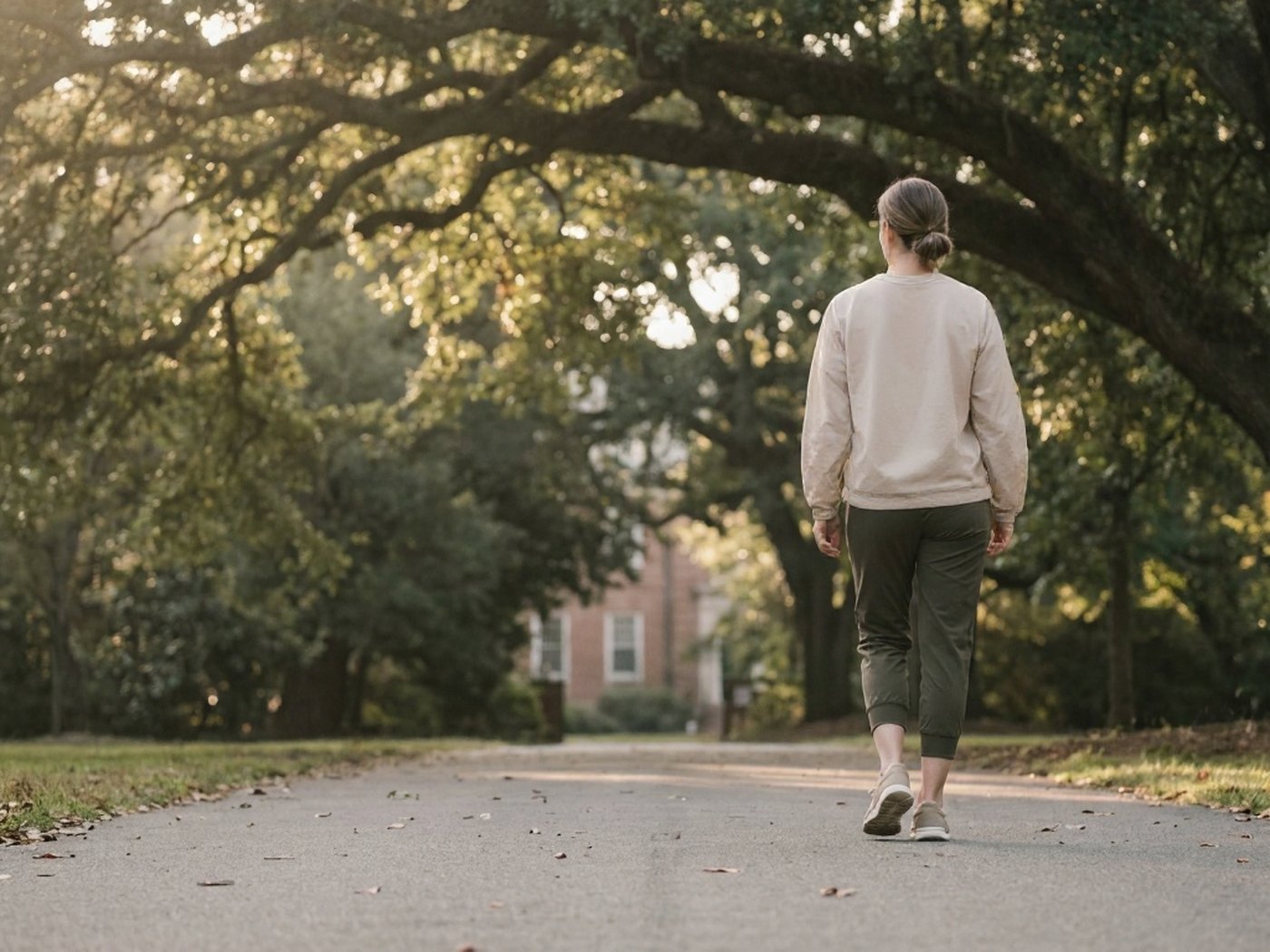
The traditional form, taught on silent meditation retreats and in 8-week mindfulness courses, is slow. You walk back and forth along a short path of 10 to 15 paces and feel each part of the step: lifting, moving, placing. It is a good way to learn the feeling of the practice, and it works indoors.
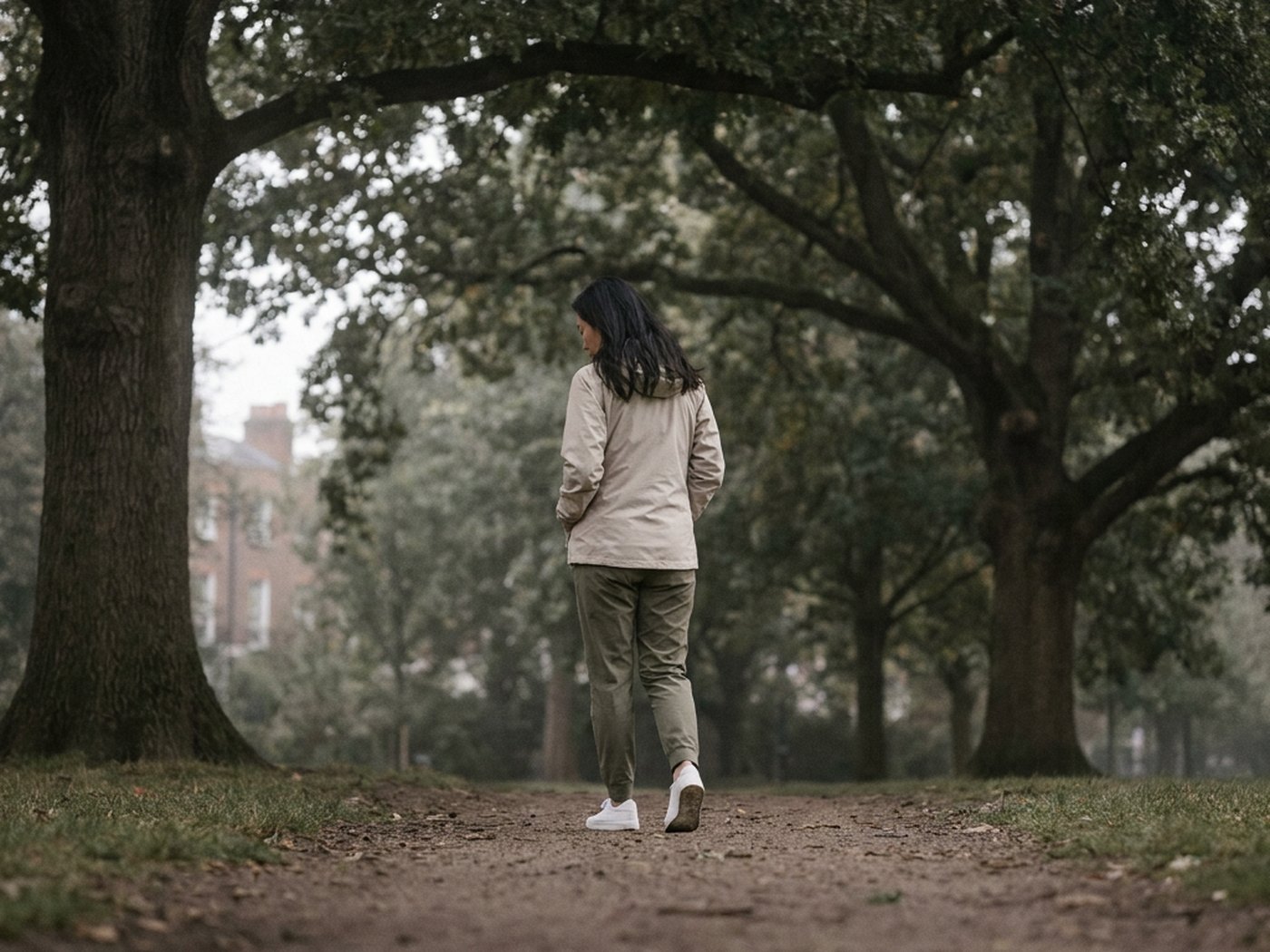
The everyday form is walking outside at about your normal pace, around the block or through a park, with the same attention. Thich Nhat Hanh taught a leisurely version of this, with the breath in step and the senses open. Most of the research below used walks at a normal pace, outside.
Start with whichever you will actually do.
Walking meditation has less research than sitting meditation, and what there is points the same way: a mindful walk lowers stress, a few spoken cues help you stay with it, and regular practice adds up.
A short walk is enough to matter. In a study across 37 sites with 2,239 people, a 15-minute mindful walk lowered stress about as well as a body scan or mindful breathing.
Regular practice helps more. In a trial in Berlin, 74 adults with high stress were split into two groups. After four weeks of mindful walking twice a week, the walking group reported much less stress and better quality of life than the group that waited. Because the comparison was a waiting list, the trial leaves open how mindful walking compares with other activities.
A voice can keep you on track. Walkers who heard short mindfulness instructions kept their attention on the walk, felt less wound up and enjoyed it more than on the same walk without them.
And walking itself does part of the work. A review of 75 trials found that walking eased anxiety symptoms, indoors or out, alone or in groups.
Walking meditation is the practice of paying attention on purpose while you walk. You feel your steps and bring your attention back to them whenever it drifts. It is meditation with your eyes open and your body moving.
Start with your feet. Most teachers use the feeling of each step as the main anchor while walking, because movement is easier to feel than the breath. Once you settle, you can let your breath fall into step or widen your attention to the sounds and sights around you. Whenever you get lost, come back to your feet.
Count your steps as you breathe. A simple pattern to start with: breathe in for three steps and out for four. If that feels tight, try two in and three out. If it feels easy, try four and four, or four in and six out. Let your lungs choose the count and keep it comfortable. If you feel dizzy or short of breath, go back to breathing normally.
Counting gives your mind one simple thing to hold and sets a slower, steadier rhythm. Thich Nhat Hanh taught it this way, with two or three steps on the in-breath and three or four on the out-breath. There is little research on matching breath to steps itself, but slow breathing is well studied: a review of 12 trials found that breathing exercises, mostly slow breathing, lowered stress by a small to moderate amount. A longer out-breath is a common tip, though in a 12-week trial it worked about as well as an even breath.
Ten minutes is a good start. The stress study used 15 minutes, and the Berlin trial used sessions of about an hour, twice a week, for four weeks. Ten minutes most days beats an hour you never get to.
Yes. Keep your eyes open, stay aware of traffic and people, and choose a route where you don't need to watch every step. If you can't sit still to meditate, walking may suit you better.
The clearest benefit in the research is lower stress, after a single 15-minute walk and over four weeks of practice. Walkers who had a few spoken cues also stayed more focused and enjoyed the walk more.
Look for one made for walking outside, with short instructions and long quiet stretches. That is how I built Mindtrek: a voice guides the first part of your walk, then mostly leaves you to it.
If you'd like a voice for your first one, start a Calm walk: pick 5, 10 or 20 minutes, and start from anywhere. Your first three guided walks are free.
And if you are in New York, Ease & Ground in the City is a 35-minute Trek around the Great Lawn in Central Park, flat and easy to walk slowly.
On the science: every study here is real. The underlined phrases link straight to the papers, and the full list is below. The summaries and takeaways are my own reading, simplified to be useful rather than complete.
Try a guided walk today
Short guided walks for any street, 5, 10 or 20 minutes. Your first 3 are free.



Field Notes by email
The research on walking and being outside, read for you and kept short. New Treks and what we are building, too.
By subscribing you agree to our Terms and Privacy Policy. Unsubscribe anytime.
Field Notes are the research. Mindtrek is the practice: guided walks and Treks built on the same studies. Free to start on iPhone and Android.
Get the app