You do not need a wilderness. Street trees, pocket parks and a river path measurably lower stress. What the urban studies found, and where in New York to test it.
Most of the people I talk to in New York assume nature means leaving the city. The research says otherwise, and it says it in numbers.
The studies below were run in Copenhagen, in a lab simulating Chicago streets, in three English towns, and across five million Californians. None of them involved a wilderness. They involved the kind of green that exists between buildings.
Stigsdotter and colleagues (2017) took 51 people to a forest and to an urban environment in Copenhagen on separate days and measured heart rate variability, blood pressure and mood. Both settings produced physiological and psychological restoration. The forest did better on several measures, but the urban environment restored people too, which surprised the authors enough to put it in the title.
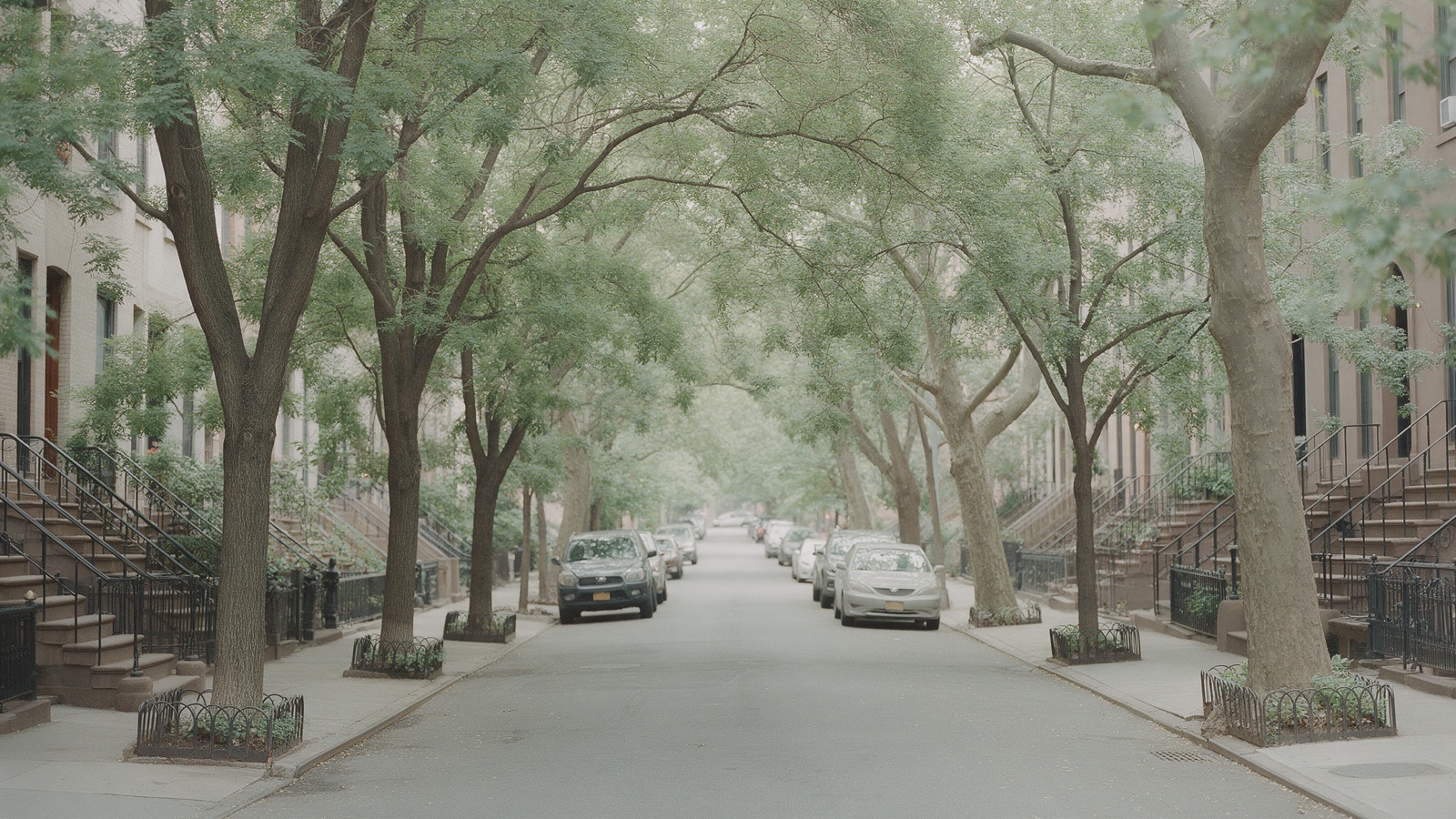
Jiang, Chang and Sullivan (2014) stressed 160 participants with a public-speaking task, then showed each a three-dimensional video of a residential street with somewhere between 2 and 62 percent tree cover. For men, stress recovery increased with tree cover in a clear dose-response curve. For women, the relationship was flat, which the authors could not fully explain. The takeaway for planners was that more canopy on ordinary streets is measurable in people's bodies.
Cox and colleagues (2017) surveyed residents of three English towns and mapped the vegetation around their homes. Living in a neighborhood with more than roughly a fifth to a third of its area under vegetation was associated with lower depression, anxiety and stress. Afternoon bird abundance had a similar link.
Van den Eeden and colleagues (2022) analyzed five million members of a California health system and their residential green cover. People living in the greenest areas had lower direct healthcare costs than those in the least green, by several hundred dollars per person per year, after adjusting for income, age and other factors. Green cover was measured at the neighborhood scale, the kind visible from a window.
Smith and Turner (2023) synthesized qualitative studies of people's own accounts of green space. The recurring themes were escape from demands, a sense of connection, calm, and a place to think. None of the participants were describing wilderness. Most were describing a local park.
Hunter and colleagues (2019) let 36 city dwellers choose their own natural spot for 20 to 30 minutes, three times a week, and measured cortisol in saliva. It fell. Most participants chose ordinary urban settings: a park, a yard, a tree-lined block.
The healthcare-cost study and the neighborhood study were about where people live, not what they did. A window that looks onto trees, a fire escape with plants, a bench on a leafy block: each is the kind of exposure those studies measured.
Size mattered less than greenness and visit length in the studies above. A small park you visit for 30 minutes beats a large one you never reach.
Traffic noise reduces the benefit, which is one reason the interior of a large park outperforms its edge. Choose the path furthest from the road.
The cortisol and street-tree studies did not screen for nature preference. The effect appeared across participants.
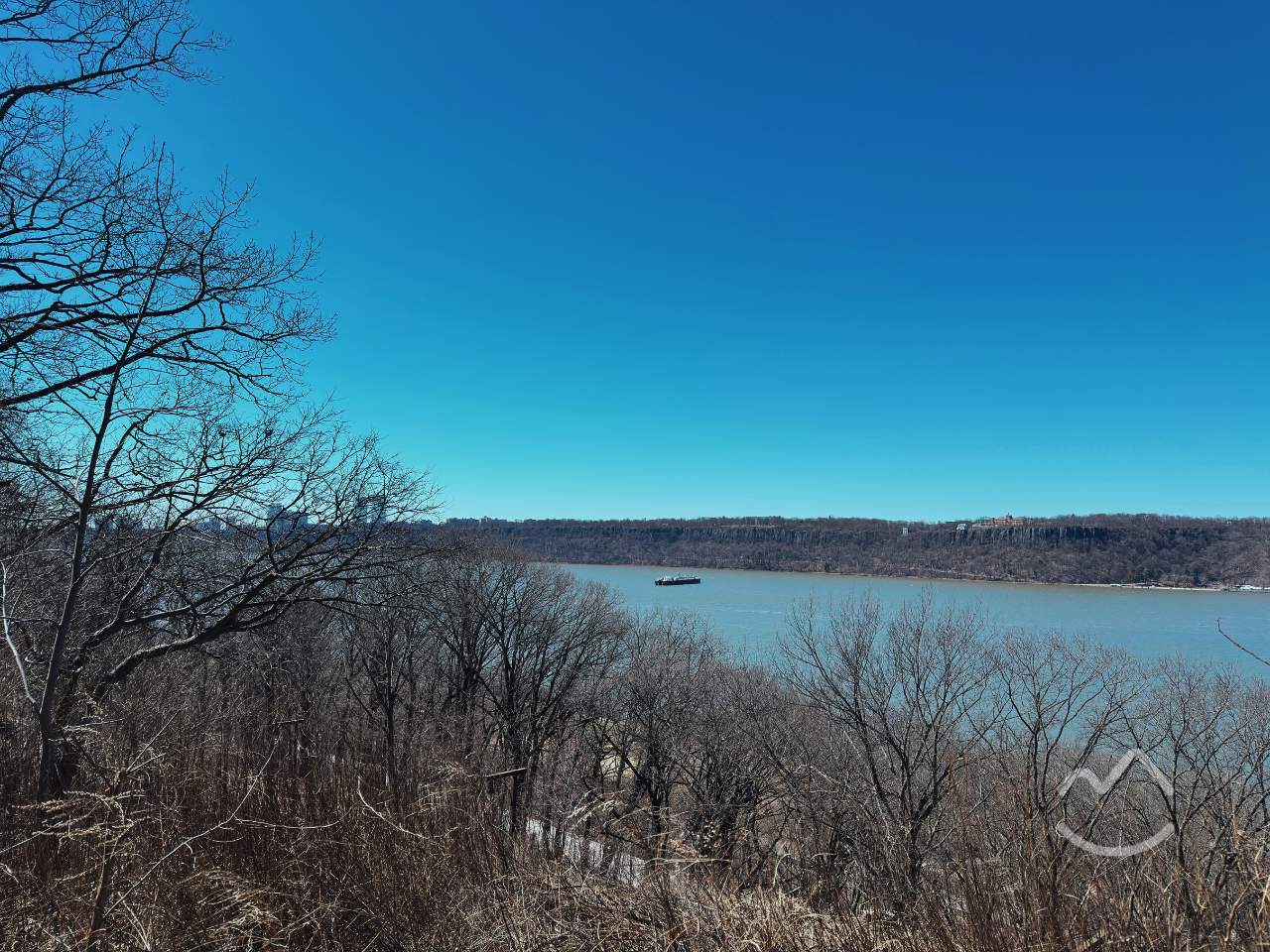
Manhattan's Last Forest is a 70-minute walk through Inwood Hill Park, the one place on the island where the trees predate the grid.
On the science: every study named here is real and linked below. The summaries and takeaways are my own reading of them, simplified to be useful rather than complete. Where a detail matters to you, the paper is one click away.